Ch. 22 The Lymphatic System and Immunity
Martini - Fundamentals of Anatomy & Physiology 11th Edition
Martini, Nath, Bartholomew11th EditionFundamentals of Anatomy & PhysiologyISBN: 9780136874089Non è quello che usi tu?Cambia libro di testo
Capitolo 22, Problema 1

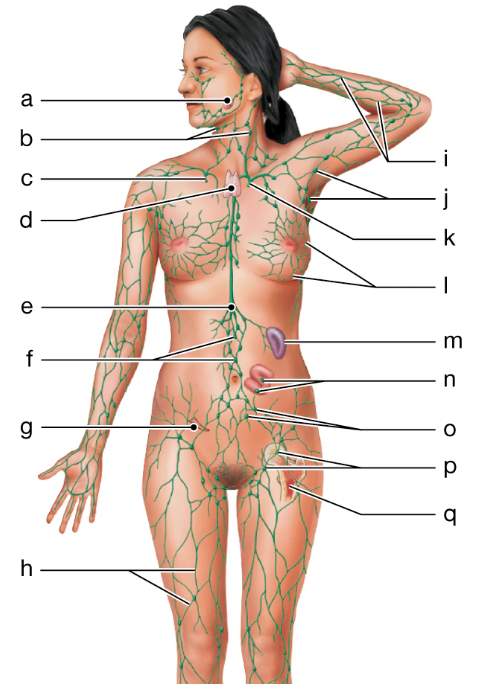
Identify the structures of the lymphatic system in the following diagram.
Diagram of a female body showing labeled lymphatic vessels and lymphoid organs throughout the head, neck, arms, torso, and legs.
a. ___
b. ___
c. ___
d. ___
e. ___
f. ___
g. ___
h. ___
i. ___
j. ___
k. ___
l. ___
m. ___
n. ___
o. ___
p. ___
q. ___

Guida verificata passo dopo passo
1
Step 1: Begin by familiarizing yourself with the major components of the lymphatic system, which typically include lymph nodes, lymphatic vessels, the thymus, spleen, tonsils, and lymphatic ducts. Understanding these will help you identify structures in the diagram.
Step 2: Examine each labeled part (a through q) in the diagram carefully, noting their shape, location, and connections. For example, lymph nodes are usually small, bean-shaped structures along lymphatic vessels, while the thymus is a gland located in the upper chest.
Step 3: Use anatomical landmarks to assist identification. For instance, the spleen is located on the left side of the body near the stomach, and the thoracic duct is a large lymphatic vessel running along the vertebral column.
Step 4: Match each label to the corresponding lymphatic structure by comparing the diagram’s features with your knowledge of lymphatic anatomy. For example, if a label points to a cluster of small nodules in the throat area, it likely represents the tonsils.
Step 5: Confirm your identifications by cross-referencing with a reliable anatomy resource or textbook to ensure each structure (a through q) is correctly named according to its position and appearance in the diagram.

Risposta video verificata per un problema simile:

Questa soluzione video è stata consigliata dai nostri tutor come utile per risolvere questo problema.

Concetti chiave

Ecco i concetti essenziali che devi comprendere per rispondere correttamente alla domanda.

Anatomy of the Lymphatic System

The lymphatic system consists of a network of vessels, nodes, and organs that help maintain fluid balance and immune defense. Key structures include lymphatic vessels, lymph nodes, the spleen, thymus, and tonsils. Understanding their location and function is essential for identifying them in diagrams.
Video consigliato:
Percorso guidato
3:57
Functions of the Lymphatic System

Lymph Nodes and Their Function

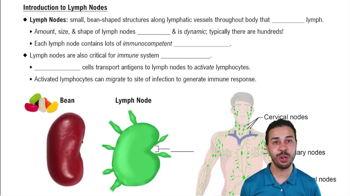
Lymph nodes are small, bean-shaped structures distributed along lymphatic vessels. They filter lymph fluid, trapping pathogens and foreign particles, and house immune cells that initiate immune responses. Recognizing their typical shape and position helps in diagram identification.
Video consigliato:
Percorso guidato
5:05
Introduction to Lymph Nodes

Primary and Secondary Lymphoid Organs

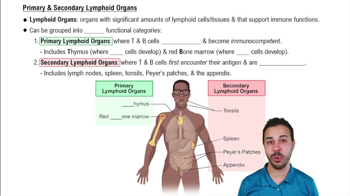
Primary lymphoid organs, like the thymus and bone marrow, are where lymphocytes mature. Secondary lymphoid organs, such as the spleen and lymph nodes, are sites where immune responses are activated. Differentiating these organs aids in correctly labeling lymphatic system diagrams.
Video consigliato:
Percorso guidato
4:34
Primary & Secondary Lymphoid Organs