Ch. 27 Fluids & Electrolytes
Martini - Fundamentals of Anatomy & Physiology 11th Edition
Martini, Nath, Bartholomew11th EditionFundamentals of Anatomy & PhysiologyISBN: 9780136874089Non è quello che usi tu?Cambia libro di testo
Capitolo 26, Problema 1

The primary components of the ECF are:
(a) Lymph and cerebrospinal fluid
(b) Plasma and serous fluids
(c) Interstitial fluid and plasma
(d) All of these

Guida verificata passo dopo passo
1
Step 1: Understand the term ECF, which stands for Extracellular Fluid. This fluid exists outside the cells and serves as a medium for transporting nutrients, gases, and waste products between blood and cells.
Step 2: Identify the main compartments of extracellular fluid. ECF is generally divided into plasma (the fluid portion of blood) and interstitial fluid (the fluid that surrounds tissue cells).
Step 3: Recognize that lymph and cerebrospinal fluid, as well as serous fluids, are specialized fluids derived from or related to the extracellular fluid but are not considered the primary components of ECF.
Step 4: Compare the options given: (a) lymph and cerebrospinal fluid, (b) plasma and serous fluids, (c) interstitial fluid and plasma, and (d) all of these. Since plasma and interstitial fluid are the main components, option (c) is the best choice.
Step 5: Conclude that the primary components of the extracellular fluid are plasma and interstitial fluid, which together make up the majority of the ECF volume.

Risposta video verificata per un problema simile:

Questa soluzione video è stata consigliata dai nostri tutor come utile per risolvere questo problema.

Concetti chiave

Ecco i concetti essenziali che devi comprendere per rispondere correttamente alla domanda.

Extracellular Fluid (ECF)

Extracellular fluid refers to all body fluid outside the cells, serving as a medium for nutrient and waste exchange. It includes various fluid types such as plasma, interstitial fluid, lymph, and specialized fluids like cerebrospinal fluid.
Video consigliato:
2:39
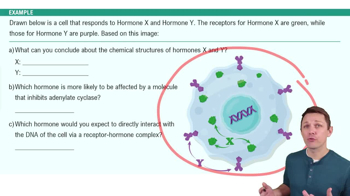
Intracellular Receptors and Direct Gene Action Example 1

Plasma and Interstitial Fluid

Plasma is the liquid component of blood, carrying cells and nutrients, while interstitial fluid surrounds tissue cells, facilitating the exchange of substances between blood and cells. Together, they form the major part of the ECF.
Video consigliato:
3:33
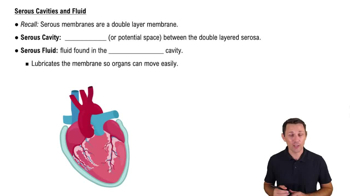
Serous Cavity and Fluid

Other Components of ECF: Lymph, Cerebrospinal Fluid, and Serous Fluids

Lymph is a fluid in the lymphatic system aiding immune function; cerebrospinal fluid cushions the brain and spinal cord; serous fluids lubricate body cavities. These specialized fluids are also part of the ECF but in smaller volumes.
Video consigliato:
3:33
Serous Cavity and Fluid