Ch. 4 The Tissue Level of Organization
Martini - Fundamentals of Anatomy & Physiology 11th Edition
Martini, Nath, Bartholomew11th EditionFundamentals of Anatomy & PhysiologyISBN: 9780136874089Non è quello che usi tu?Cambia libro di testo
Capitolo 4, Problema 27

A layer of glycoproteins and a network of fine protein filaments that prevents the movement of proteins and other large molecules from the connective tissue to the epithelium describe
(a) Interfacial canals
(b) The basement membrane
(c) The reticular lamina
(d) Areolar tissue
(e) Squamous epithelium

Guida verificata passo dopo passo
1
Step 1: Understand the key components described in the problem. The question mentions a layer of glycoproteins and a network of fine protein filaments that act as a barrier preventing the movement of proteins and large molecules from connective tissue to the epithelium.
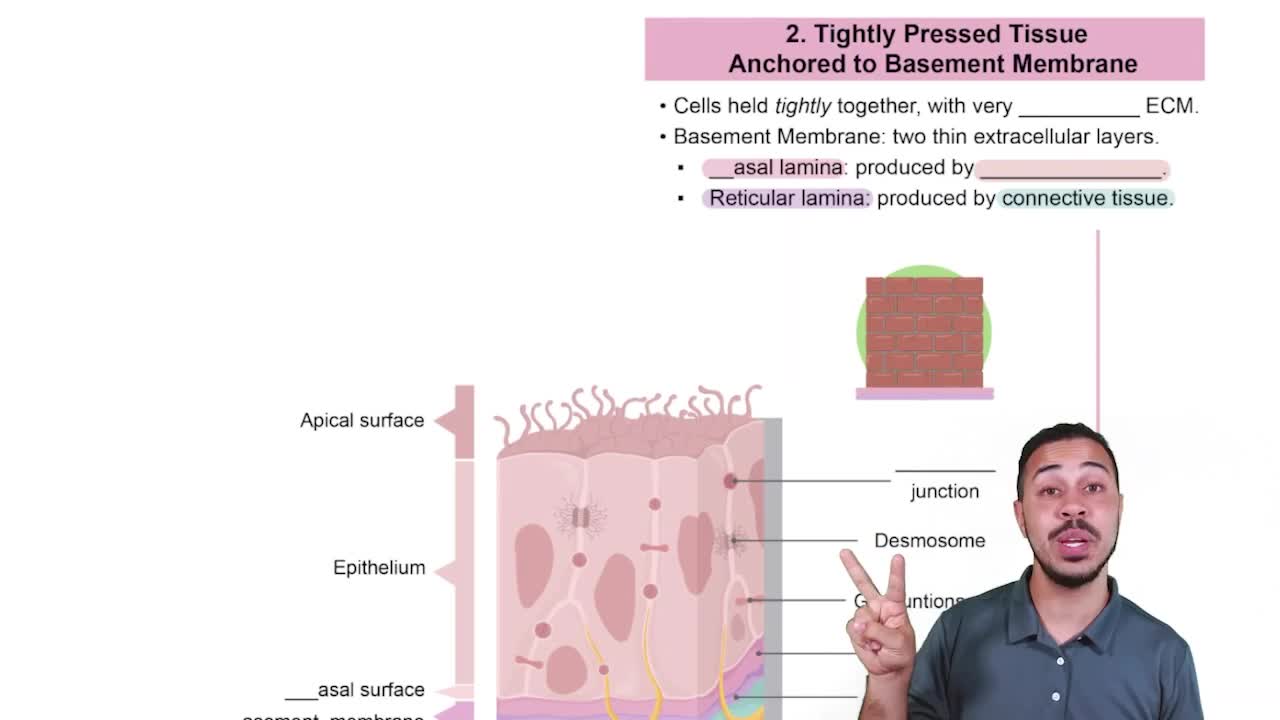
Step 2: Recall the structure of the basement membrane, which is a specialized extracellular matrix located between the epithelium and connective tissue. It consists of two main layers: the basal lamina (rich in glycoproteins) and the reticular lamina (composed of protein filaments).
Step 3: Identify the function of the basement membrane, which includes acting as a selective barrier that restricts the passage of large molecules and proteins, supporting epithelial cells, and anchoring them to the underlying connective tissue.
Step 4: Compare the options given: (a) Interfacial canals are not related to this barrier function; (c) The reticular lamina is part of the basement membrane but alone does not describe the entire barrier; (d) Areolar tissue is a type of connective tissue, not a barrier layer; (e) Squamous epithelium is a type of epithelial tissue, not a barrier layer between tissues.
Step 5: Conclude that the correct description corresponds to (b) The basement membrane, as it matches both the structural components (glycoproteins and protein filaments) and the functional role of preventing movement of proteins and large molecules from connective tissue to epithelium.

Risposta video verificata per un problema simile:

Questa soluzione video è stata consigliata dai nostri tutor come utile per risolvere questo problema.
Durata del video:
4m

Concetti chiave

Ecco i concetti essenziali che devi comprendere per rispondere correttamente alla domanda.

Basement Membrane

The basement membrane is a thin, dense layer of glycoproteins and protein filaments located between the epithelium and connective tissue. It acts as a selective barrier, preventing large molecules and proteins from passing freely, thus maintaining tissue integrity and supporting cell attachment.
Video consigliato:
06:01
Characteristic 2: Tightly Pressed Tissue Anchored to Basement Membrane

Glycoproteins and Protein Filaments

Glycoproteins are proteins with carbohydrate groups that contribute to the structural framework of the basement membrane. Protein filaments, such as collagen, form a network that provides mechanical strength and filtration properties, controlling molecular movement between tissues.
Video consigliato:
6:26
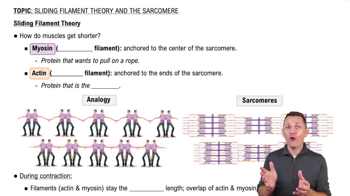
Sliding Filament Theory

Connective Tissue and Epithelium Interface

This interface is where the basement membrane resides, separating connective tissue from epithelial layers. It regulates exchange of substances, supports epithelial cells, and plays a role in tissue repair and regeneration by anchoring cells and filtering molecules.
Video consigliato:
08:25
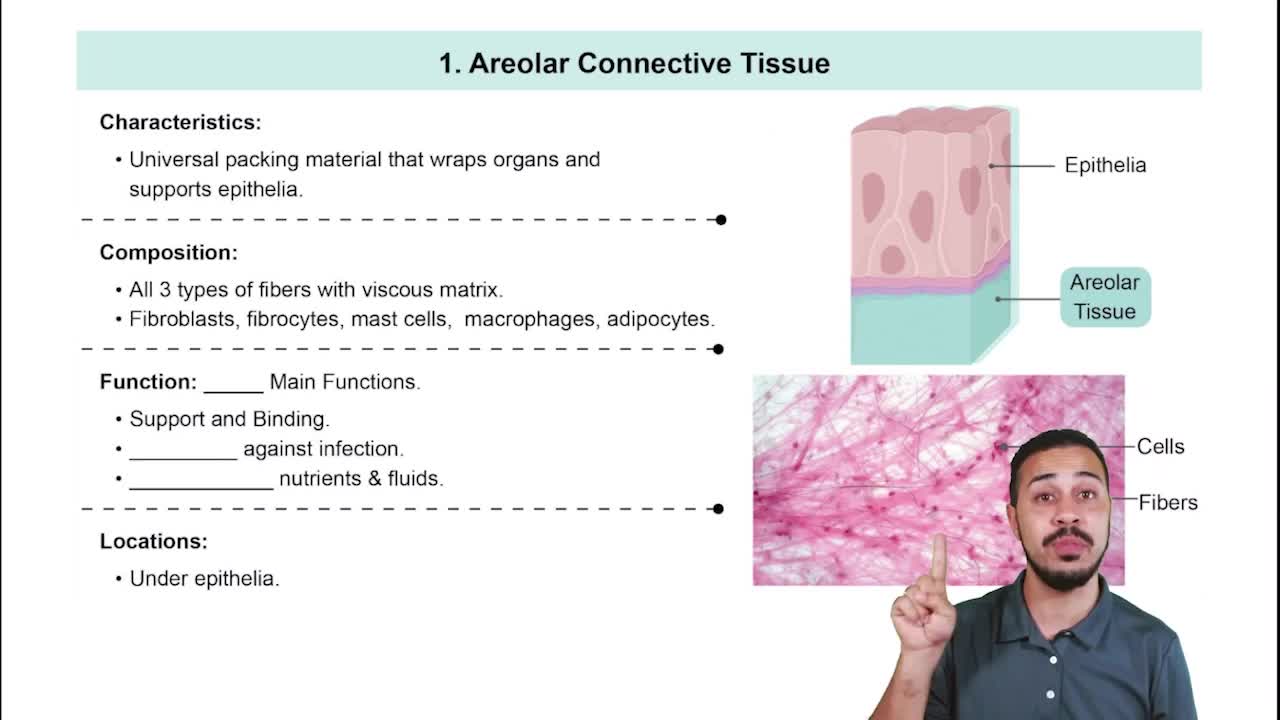
Areolar Connective Tissue