Why is it important for a surgeon to choose—when possible—an incision pattern according to the skin's tension lines?
Ch. 5 The Integumentary System
Martini, Nath, Bartholomew11th EditionFundamentals of Anatomy & PhysiologyISBN: 9780136874089Non è quello che usi tu?Cambia libro di testo
Tutti i libri di testo
Martini, Nath, Bartholomew 11th Edition
Ch. 5 The Integumentary System
Problema 18
Martini, Nath, Bartholomew 11th Edition
Ch. 5 The Integumentary System
Problema 18Capitolo 5, Problema 18
What two major layers constitute the dermis, and what components are in each layer?
Guida verificata passo dopo passo1
Identify the two major layers of the dermis: the papillary layer and the reticular layer.
Describe the papillary layer as the upper, thinner layer composed mainly of loose connective tissue, containing capillaries, sensory neurons, and dermal papillae that interlock with the epidermis.
Explain that the papillary layer contains components such as fibroblasts, mast cells, macrophages, and small blood vessels that nourish the epidermis.
Describe the reticular layer as the deeper, thicker layer made of dense irregular connective tissue, which provides strength and elasticity to the skin.
List the components of the reticular layer, including collagen and elastin fibers, larger blood vessels, lymph vessels, sweat glands, sebaceous glands, hair follicles, and deep pressure receptors.

Risposta video verificata per un problema simile:
Questa soluzione video è stata consigliata dai nostri tutor come utile per risolvere questo problema.
Durata del video:
2mConcetti chiave
Ecco i concetti essenziali che devi comprendere per rispondere correttamente alla domanda.
Structure of the Dermis
The dermis is the thick layer of skin beneath the epidermis, providing strength and flexibility. It is primarily composed of connective tissue and supports various skin functions.
Video consigliato:
Percorso guidato
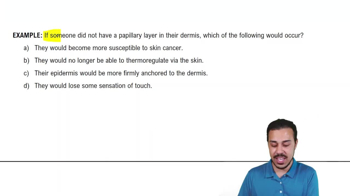
The Dermis Example 1
Papillary Layer
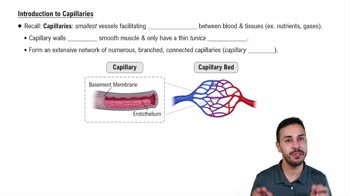
The papillary layer is the upper, thinner part of the dermis made of loose connective tissue. It contains capillaries, sensory neurons, and dermal papillae that interlock with the epidermis, aiding nutrient exchange and sensation.
Video consigliato:
Percorso guidato
Introduction to Capillaries
Reticular Layer
The reticular layer is the deeper, thicker part of the dermis composed of dense irregular connective tissue. It houses collagen and elastin fibers, blood vessels, sweat glands, hair follicles, and nerve endings, providing strength and elasticity.
Video consigliato:
Percorso guidato
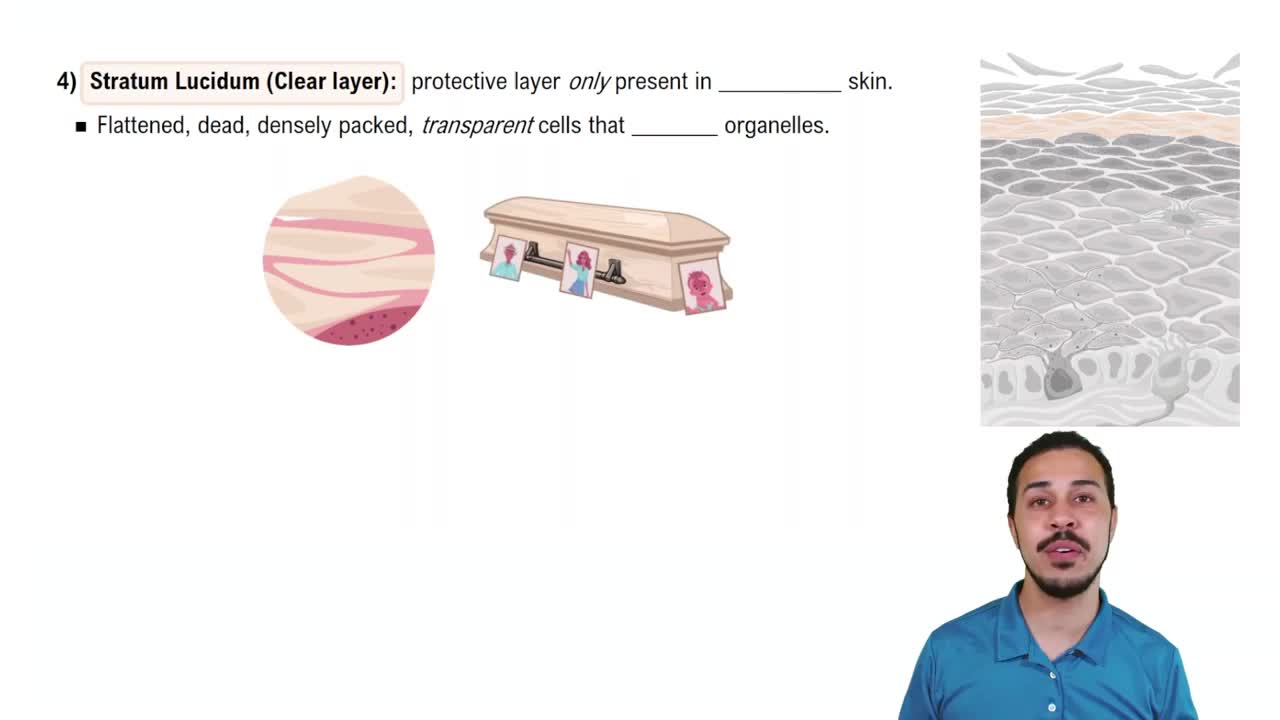
Epidermal Layers: Stratum Lucidum (Clear Layer)
Pratica correlata
Domanda del libro di testo
63
views
Domanda del libro di testo
In which layer(s) of the epidermis does cell division occur?
88
views
Domanda del libro di testo
List the four phases in the regeneration of the skin after an injury.
61
views
Domanda del libro di testo
The cutaneous plexus and subpapillary plexus consist of
a. Blood vessels providing the dermal blood supply.
b. A network of nerves providing dermal sensations.
c. Specialized cells for cutaneous sensations.
d. Gland cells that release cutaneous secretions.
139
views
Domanda del libro di testo
What widespread effects does epidermal growth factor (EGF) have on the integument?
56
views
Domanda del libro di testo
In clinical practice, drugs can be delivered by diffusion across the skin. This delivery method is called transdermal administration. Why are fat-soluble drugs more suitable for transdermal administration than drugs that are water soluble?
57
views