Ch. 6 Bones and Bone Structure
Martini - Fundamentals of Anatomy & Physiology 11th Edition
Martini, Nath, Bartholomew11th EditionFundamentals of Anatomy & PhysiologyISBN: 9780136874089Non è quello che usi tu?Cambia libro di testo
Capitolo 6, Problema 7e

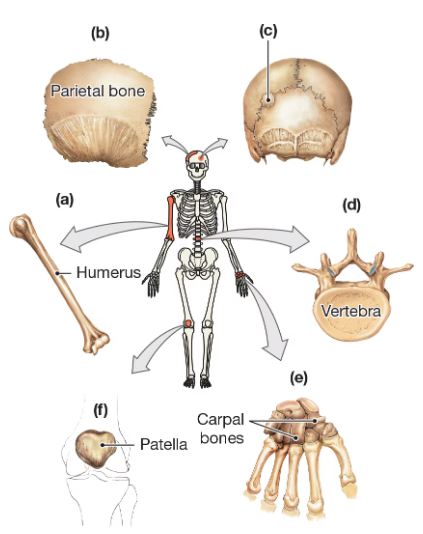
Classify the bones in the following diagram according to their shape.
e. _____
Diagram of a human skeleton with labeled bones including humerus, parietal bone, vertebra, carpal bones, and patella.

Guida verificata passo dopo passo
1
Step 1: Identify the types of bone shapes commonly classified in anatomy: long bones, short bones, flat bones, irregular bones, and sesamoid bones.
Step 2: Examine the parietal bone in the image. It is broad, thin, and curved, which are characteristics of flat bones.
Step 3: Look at the vertebra. It has a complex shape with projections and irregular surfaces, classifying it as an irregular bone.
Step 4: Observe the long bone shown (likely a femur or humerus). It is longer than it is wide, with a shaft and two ends, fitting the description of a long bone.
Step 5: Identify the cluster of small bones in the wrist (carpals). These are roughly cube-shaped and fit the category of short bones.

Risposta video verificata per un problema simile:

Questa soluzione video è stata consigliata dai nostri tutor come utile per risolvere questo problema.
Durata del video:
2m

Concetti chiave

Ecco i concetti essenziali che devi comprendere per rispondere correttamente alla domanda.

Bone Classification by Shape

Bones are classified into four main shapes: long, short, flat, and irregular. This classification is based on their shape and structure, which relates to their function in the body. Understanding these categories helps in identifying bones and their roles.
Video consigliato:
Percorso guidato
08:25
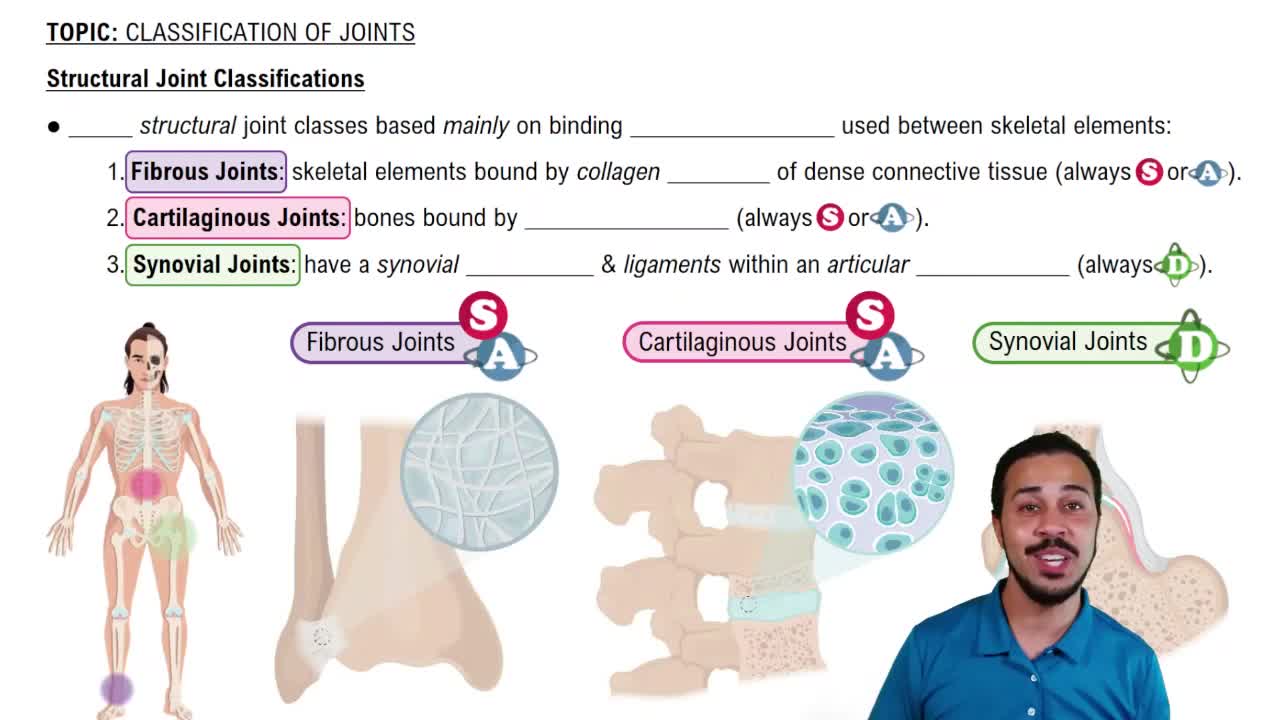
Structural Joint Classifications

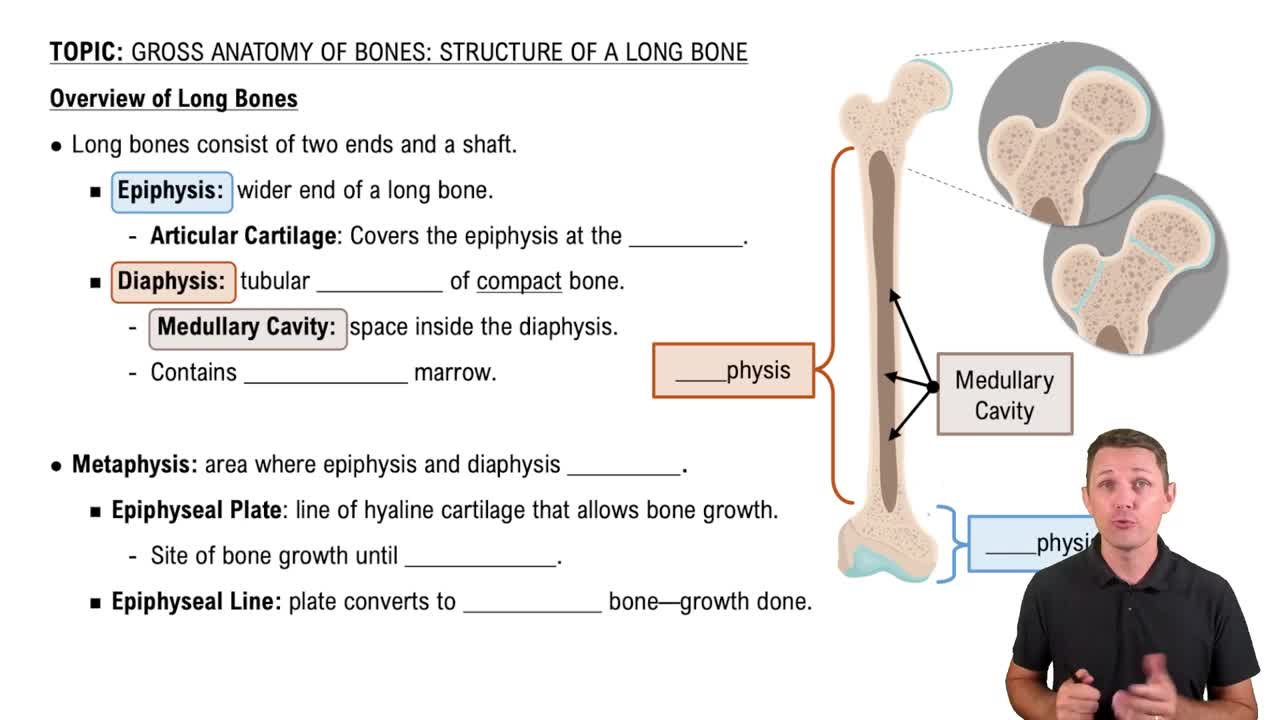
Long Bones

Long bones are characterized by a length greater than their width and primarily function in support and movement. Examples include the femur and humerus. They typically have a shaft (diaphysis) and two ends (epiphyses).
Video consigliato:
6:19
Overview of Long Bones

Flat and Irregular Bones

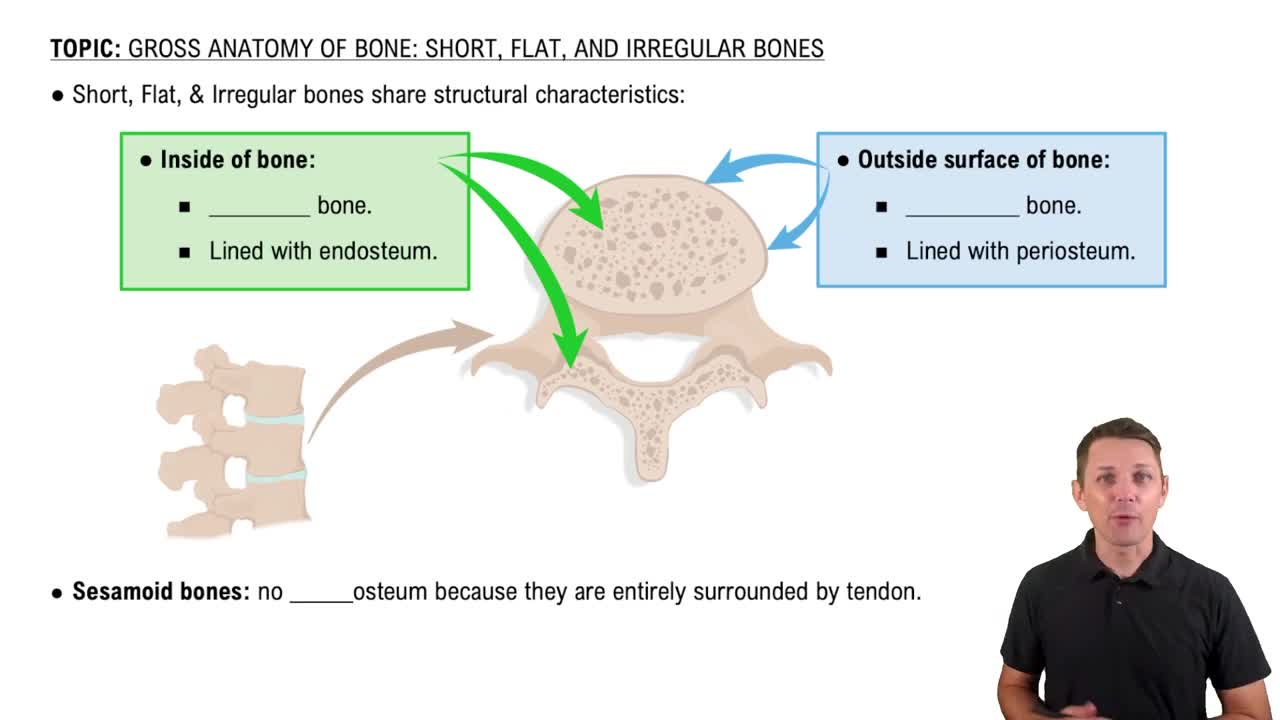
Flat bones, like the parietal bone, are thin and often curved, providing protection and surface area for muscle attachment. Irregular bones, such as vertebrae, have complex shapes that do not fit other categories and serve specialized functions like protecting the spinal cord.
Video consigliato:
2:58
Short, Flat, and Irregular Bones