Ch. 18 The Endocrine System
Martini - Fundamentals of Anatomy & Physiology 12th Edition
Martini, Nath, Bartholomew12th EditionFundamentals of Anatomy & PhysiologyISBN: 9780137854011Non è quello che usi tu?Cambia libro di testo
Capitolo 18, Problema 19

In what ways can a hormone modify the activities of its target cells?

Guida verificata passo dopo passo
1
Understand that hormones modify the activities of their target cells by binding to specific receptors either on the cell surface or inside the cell, depending on the hormone type.
Recognize that once the hormone binds to its receptor, it can trigger a cascade of intracellular events that alter the cell's function, such as activating or inhibiting enzymes, opening ion channels, or changing gene expression.
For peptide or protein hormones, which are generally water-soluble, the hormone binds to membrane receptors and activates second messenger systems (e.g., cAMP), leading to rapid changes in cell activity.
For steroid hormones, which are lipid-soluble, the hormone typically crosses the cell membrane and binds to intracellular receptors, directly influencing gene transcription and protein synthesis, resulting in longer-term effects.
Summarize that hormone effects can include altering membrane permeability, stimulating synthesis of proteins or enzymes, activating or deactivating enzymes, inducing secretory activity, or promoting mitosis, all of which modify the target cell's activity.

Risposta video verificata per un problema simile:

Questa soluzione video è stata consigliata dai nostri tutor come utile per risolvere questo problema.

Concetti chiave

Ecco i concetti essenziali che devi comprendere per rispondere correttamente alla domanda.

Hormone-Receptor Interaction

Hormones modify target cell activities by binding to specific receptors on or inside the cell. This binding triggers a cascade of cellular events, ensuring that only cells with the appropriate receptors respond to the hormone.
Video consigliato:
13:06
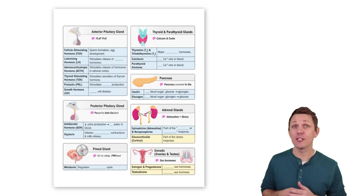
Review of Major Hormones

Signal Transduction Pathways

Once a hormone binds to its receptor, it activates signal transduction pathways that convert the extracellular hormone signal into intracellular actions. These pathways often involve second messengers like cAMP, leading to changes in enzyme activity or gene expression.
Video consigliato:
Percorso guidato
4:40
Alternative Pathway

Cellular Responses to Hormones

Hormones can alter target cell activities by changing membrane permeability, stimulating protein synthesis, activating or inhibiting enzymes, or modifying gene expression. These responses adjust the cell’s function to meet physiological needs.
Video consigliato:
13:06
Review of Major Hormones