 Indietro
Cell-Cell Interactions: Structure and Function of Extracellular Layers
Guida di studio - Note intelligenti
 Appunti personalizzati basati sui tuoi materiali, ampliati con definizioni chiave, esempi e contesto.
Cell-Cell Interactions
Overview
Cell-cell interactions are essential for the structure, function, and communication of multicellular organisms. Both plant and animal cells produce extracellular structures that provide support, mediate attachment, and regulate the movement of substances between cells. This section explores the composition and function of these extracellular layers and the specialized junctions that connect adjacent cells.
Structure of the Outside of Plant Cells
Primary Cell Wall
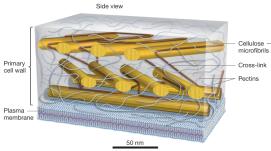
The primary cell wall is a defining feature of most plant cells, providing structural support and determining cell shape. It is a fiber composite mainly composed of cellulose microfibrils embedded in a matrix of other polysaccharides.
Cellulose microfibrils: Long strands of cellulose bundled into cable-like structures that form a crisscrossed network.
Pectins: Gelatinous polysaccharides that fill the spaces between microfibrils, keeping the cell wall moist and flexible.
Function: The cell wall defines the shape of the plant cell and counteracts turgor pressure resulting from water uptake by osmosis.
Middle Lamella
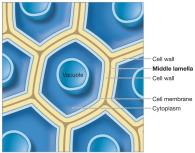
The middle lamella is a pectin-rich layer that cements adjacent plant cells together, facilitating adhesion and communication.
Location: Found between the primary cell walls of neighboring cells.
Function: Acts as a glue to hold cells together within plant tissues.
Structure of the Outside of Animal Cells
Extracellular Matrix (ECM)
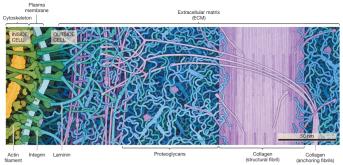
The extracellular matrix (ECM) is a complex network of proteins and polysaccharides secreted by animal cells. It provides structural support, mediates cell attachment, and influences cell behavior.
Fibrous component: Mainly composed of collagen, which forms strong fibrils for structural integrity.
Ground substance: Made of proteoglycans—proteins with attached polysaccharides—giving tissues like cartilage a rubber-like consistency.
Integrins: Membrane proteins that connect the ECM to the cell's cytoskeleton, anchoring cells and facilitating communication.
Cell-Cell Attachments in Animal Cells
Tight Junctions
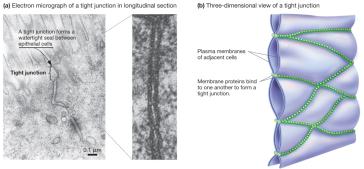
Tight junctions are specialized connections between adjacent animal cells that create a watertight seal, restricting the movement of substances between cells.
Structure: Composed of membrane proteins that line up and bind to each other across neighboring cells.
Function: Prevents leakage of materials between cells, crucial in tissues like the gut and bladder.
Dynamic nature: Tight junctions can open and close in response to environmental changes, such as in blood vessels or the small intestine.
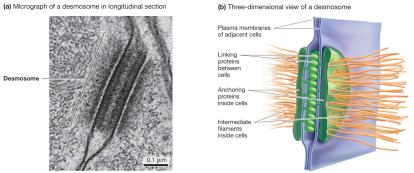
Desmosomes
Desmosomes provide strong cell-cell adhesion, especially in tissues subject to mechanical stress, such as skin and muscle.
Structure: Consist of linking proteins (cadherins) and cytosolic anchoring proteins that connect the cytoskeletons of adjacent cells.
Intermediate filaments: Cytoskeletal elements that reinforce desmosomes, providing additional strength.
Function: Maintain tissue integrity by holding cells together under stress.
Summary Table: Comparison of Plant and Animal Extracellular Structures
Feature | Plant Cells | Animal Cells |
|---|---|---|
Main Structure | Primary Cell Wall | Extracellular Matrix (ECM) |
Key Components | Cellulose, Pectins | Collagen, Proteoglycans |
Attachment Between Cells | Middle Lamella | Tight Junctions, Desmosomes |
Function | Shape, Support, Adhesion | Support, Adhesion, Communication |
