 Indietro
Chapter 1: Biology – The Study of Life
Guida di studio - Note intelligenti
 Appunti personalizzati basati sui tuoi materiali, ampliati con definizioni chiave, esempi e contesto.
Biology: The Study of Life
1.1 What Does It Mean to Say That Something Is Alive?
Biology is the scientific study of life and living organisms. To be considered alive, an entity must exhibit several fundamental characteristics:
Cells: All living things are composed of membrane-bound units called cells, which regulate the passage of materials between the interior and exterior environments.
Replication: Living organisms reproduce by cell division, ensuring the continuation of life.
Information: Genetic information, stored in genes, determines hereditary traits and guides cellular functions.
Energy: Organisms require energy to carry out biological processes and maintain life.
Evolution: Populations of organisms evolve over time, adapting to their environments.
Three of the greatest unifying ideas in science are the cell theory, the chromosome theory of inheritance, and the theory of evolution. These concepts have shaped modern biological thought and research.
1.2 Life Is Cellular and Replicates Through Cell Division
The discovery of cells was pivotal in understanding life. Robert Hooke, using a crude microscope, first observed and named "cells" in cork tissue. Anton van Leeuwenhoek improved the microscope and observed single-celled organisms, which he called "animalcules." By the 1800s, it was established that all organisms are made of cells.
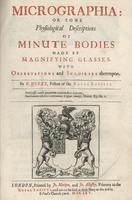
The Cell Theory states that all organisms are made of cells, and all cells arise from pre-existing cells. This was experimentally confirmed by Louis Pasteur, who showed that life does not arise spontaneously but only from existing cells.
Key Experiment: Pasteur's broth experiment demonstrated that only broth exposed to pre-existing cells developed life, supporting the hypothesis that all cells come from other cells.
1.3 Life Processes Information and Requires Energy
The Chromosome Theory of Inheritance revealed that genetic material is carried on chromosomes, which are composed of DNA. In 1953, Watson and Crick, building on Rosalind Franklin's work, described the double helix structure of DNA. DNA is made of four nucleotides: Adenine (A), Thymine (T), Guanine (G), and Cytosine (C). In RNA, Uracil (U) replaces Thymine.
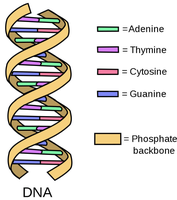
Base Pairing: A pairs with T (or U in RNA), and G pairs with C.
Central Dogma: DNA codes for RNA, which codes for protein. Proteins perform essential cellular functions.
Energy is required for all cellular processes. Adenosine Triphosphate (ATP) is the primary energy carrier in cells. Organisms obtain energy by consuming food or, in the case of plants and some bacteria, by converting sunlight into chemical energy.
1.4 Life Evolves
Charles Darwin introduced the concept of evolution by natural selection. He made two key claims:
Species are related by common ancestry.
Species can change over generations through the modification of traits.
Evolution is the change in the characteristics of a population over time. Natural selection occurs when individuals with advantageous heritable traits produce more offspring, making those traits more common in the population.
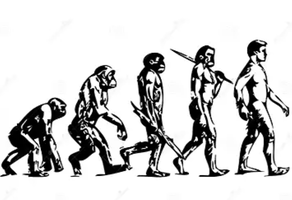
Fitness: The ability to produce viable offspring. Higher fitness means more surviving offspring.
Adaptation: A heritable trait that increases an individual's fitness in a specific environment.
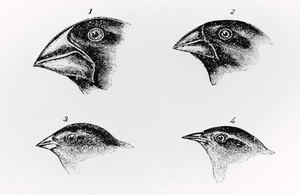
Darwin’s finches are a classic example: different beak shapes evolved to exploit different food sources.
1.5 The “Tree of Life” Depicts Evolutionary History
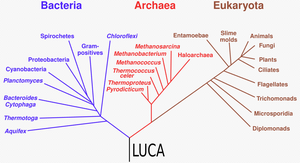
Carl Woese used genetic data to construct the phylogeny of all organisms, comparing RNA sequences to determine evolutionary relationships. A phylogenetic tree visually represents these relationships, showing how species diverged from common ancestors.
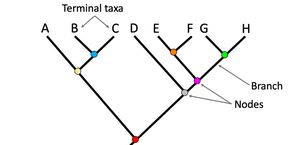
The Last Universal Common Ancestor (LUCA) is the most recent common ancestor of all current life forms. Life is classified into three domains:
Bacteria
Archaea
Eukarya
Eukaryotes have a nucleus, while prokaryotes (Bacteria and Archaea) do not. Most prokaryotes are unicellular.
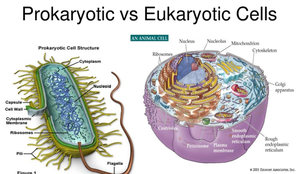
The tree of life is continually revised as new data emerges. Major lineages within each domain are called phyla.
Carolus Linnaeus developed the binomial system for naming species, using a two-part name: the genus (capitalized) and the species (not capitalized, often descriptive). Example: Homo sapiens.
1.6 Doing Biology
Biology relies on the scientific method: formulating hypotheses, conducting experiments, and analyzing data. Hypothesis testing involves:
Stating a hypothesis and its predictions.
Designing experiments or observations to test those predictions.
Results are communicated through publications and conferences. For example, a study on giraffe feeding behavior tested the hypothesis that longer necks provide a feeding advantage, but found that giraffes often feed with bent necks, illustrating evidence-based decision making.
