Ch. 28 - Protists
Campbell - Campbell Biology 12th Edition
Urry12th EditionCampbell BiologyISBN: 9785794169850Non è quello che usi tu?Cambia libro di testo
Capitolo 28, Problema 3

Which group is correctly paired with its description?


A. diatoms—important consumers in aquatic communities
B. diplomonads—protists with modified mitochondria
C. apicomplexans—producers with intricate life cycles
D. red algae—acquired plastids by secondary endosymbiosis

Guida verificata passo dopo passo
1
Identify the role of each group mentioned in the options within their respective ecosystems or their biological characteristics.
Understand the terms used in the descriptions: consumers, producers, modified mitochondria, and secondary endosymbiosis.
Evaluate whether diatoms are primarily consumers or if they play a different role in aquatic communities.
Assess the accuracy of the statement regarding diplomonads and their mitochondrial characteristics.
Verify if red algae acquired their plastids through secondary endosymbiosis and what this process entails.

Risposta video verificata per un problema simile:

Questa soluzione video è stata consigliata dai nostri tutor come utile per risolvere questo problema.
Durata del video:
2m

Concetti chiave

Ecco i concetti essenziali che devi comprendere per rispondere correttamente alla domanda.

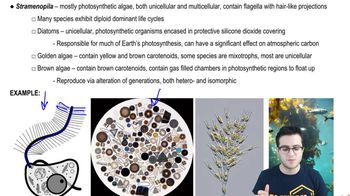
Diatoms

Diatoms are a group of microalgae characterized by their unique silica cell walls, which form intricate patterns. They are primarily photosynthetic organisms and play a crucial role as primary producers in aquatic ecosystems, forming the base of the food web. While they are not consumers, they are essential for oxygen production and carbon fixation in marine and freshwater environments.
Video consigliato:
10:24
Stramenopila and Alveolata

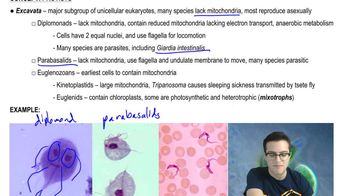
Diplomonads

Diplomonads are a group of protists known for having modified mitochondria called mitosomes, which lack the ability to perform aerobic respiration. They are often found in anaerobic environments and include species like Giardia, which can cause intestinal infections in humans. Their unique cellular structure and lifestyle distinguish them from other eukaryotic organisms.
Video consigliato:
05:57
Excavata and Archaeplastida (Plantae)

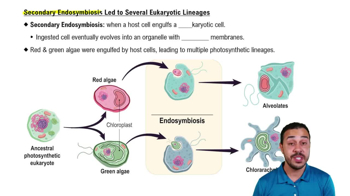
Red Algae and Secondary Endosymbiosis

Red algae are a group of photosynthetic eukaryotes that possess chlorophyll a and are known for their red pigments, which allow them to thrive in deeper waters. They acquired their plastids through a process called secondary endosymbiosis, where a eukaryotic cell engulfed a red alga. This evolutionary event has significant implications for the diversity of photosynthetic organisms in aquatic environments.
Video consigliato:
02:37
Secondary Endosymbiosis Led to Several Eukaryotic Lineages
Pratica correlata