
Domanda del libro di testo
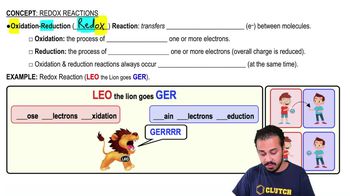
What is the oxidizing agent in the following reaction?
Pyruvate + NADH + H+ → Lactate + NAD+
a. Oxygen
b. NADH
c. Lactate
d. Pyruvate
5744
views

 Guida verificata passo dopo passo
 04:47
04:47
 04:51
04:51 04:57
04:57What is the oxidizing agent in the following reaction?
Pyruvate + NADH + H+ → Lactate + NAD+
a. Oxygen
b. NADH
c. Lactate
d. Pyruvate
The final electron acceptor of the electron transport chain that functions in aerobic oxidative phosphorylation is
a. Oxygen.
b. Water.
c. NAD+.
d. Pyruvate.
Which metabolic pathway is common to both fermentation and cellular respiration of a glucose molecule?
a. The citric acid cycle
b. The electron transport chain
c. Glycolysis
d. Reduction of pyruvate to lactate
Most CO2 from catabolism is released during
a. Glycolysis.
b. The citric acid cycle.
c. Lactate fermentation.
d. Electron transport.
When electrons flow along the electron transport chains of mitochondria, which of the following changes occurs?
a. The pH of the matrix increases.
b. ATP synthase pumps protons by active transport.
c. The electrons gain free energy.
d. NAD+ is oxidized.
The immediate energy source that drives ATP synthesis by ATP synthase during oxidative phosphorylation is the
a. Oxidation of glucose and other organic compounds.
b. Flow of electrons down the electron transport chain.
c. H+ concentration gradient across the membrane holding ATP synthase.
d. Transfer of phosphate to ADP.