

Ch.11 - Liquids and Intermolecular Forces
Brown - Chemistry: The Central Science 14th Edition
Brown14th EditionChemistry: The Central ScienceISBN: 9780134414232Non è quello che usi tu?Cambia libro di testo
Capitolo 11, Problema 20e

True or false: (e) The larger the atom, the more polarizable it is.

Guida verificata passo dopo passo
1
Understand the concept of polarizability: Polarizability refers to the ability of an atom's electron cloud to be distorted by an external electric field.
Recognize the relationship between atomic size and electron cloud: Larger atoms have more diffuse electron clouds because their outer electrons are further from the nucleus.
Consider the effect of nuclear charge on electron cloud distortion: In larger atoms, the outer electrons are less tightly held by the nucleus due to increased distance and shielding by inner electrons.
Relate atomic size to polarizability: Since the electrons in larger atoms are less tightly held, they can be more easily distorted, making the atom more polarizable.
Conclude the statement: Based on the relationship between atomic size and ease of electron cloud distortion, determine if the statement 'The larger the atom, the more polarizable it is' is true or false.

Risposta video verificata per un problema simile:

Questa soluzione video è stata consigliata dai nostri tutor come utile per risolvere questo problema.
Durata del video:
1m

Concetti chiave

Ecco i concetti essenziali che devi comprendere per rispondere correttamente alla domanda.

Atomic Size and Polarizability

Polarizability refers to the ability of an electron cloud around an atom to be distorted by an external electric field. Generally, larger atoms have more electrons and a more diffuse electron cloud, making them more polarizable. This means that as atomic size increases, the electron cloud is less tightly held by the nucleus, allowing for greater distortion.
Video consigliato:

Electron Cloud and Shielding Effect

The shielding effect occurs when inner electrons repel outer electrons, reducing the effective nuclear charge felt by the outermost electrons. In larger atoms, the increased number of inner electrons leads to greater shielding, which allows the outer electrons to be more easily influenced by external forces, contributing to higher polarizability.
Video consigliato:
Percorso guidato
02:31
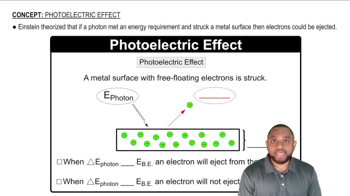
Photoelectric Effect

Comparative Polarizability in Elements

When comparing elements, polarizability tends to increase down a group in the periodic table due to the increase in atomic size and the number of electron shells. For example, larger halogens like iodine are more polarizable than smaller ones like fluorine. This trend is crucial for understanding intermolecular forces and reactivity in chemical compounds.
Video consigliato:
Percorso guidato
02:35
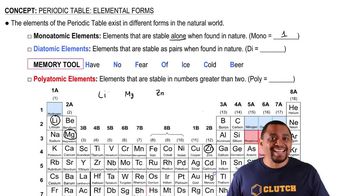
Elemental Forms of Elements