Ch.12 - Solids and Modern Materials
Brown - Chemistry: The Central Science 14th Edition
Brown14th EditionChemistry: The Central ScienceISBN: 9780134414232Non è quello che usi tu?Cambia libro di testo
Capitolo 12, Problema 126c

(c) What atomic orbitals are involved in the stacking of graphite sheets with each other?
3D model of graphite structure showing atomic stacking and bonding interactions.

Guida verificata passo dopo passo
1
Identify the structure of graphite, which consists of layers of carbon atoms arranged in a hexagonal lattice.
Understand that each carbon atom in graphite is sp2 hybridized, forming three sigma bonds with three neighboring carbon atoms in the same plane.
Recognize that the remaining p orbital on each carbon atom, which is perpendicular to the plane of the sigma bonds, overlaps with p orbitals on adjacent carbon atoms to form a pi bond network.
Note that the pi bonds create a delocalized electron cloud above and below the plane of the carbon atoms, contributing to the stability and electrical conductivity of graphite.
Conclude that the stacking of graphite sheets involves interactions between these delocalized pi electron clouds from adjacent layers.

Risposta video verificata per un problema simile:

Questa soluzione video è stata consigliata dai nostri tutor come utile per risolvere questo problema.
Durata del video:
2m

Concetti chiave

Ecco i concetti essenziali che devi comprendere per rispondere correttamente alla domanda.

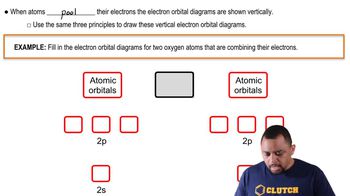
Atomic Orbitals

Atomic orbitals are regions in an atom where there is a high probability of finding electrons. They are defined by quantum mechanics and include s, p, d, and f orbitals. In graphite, the relevant orbitals are primarily the sp² hybridized orbitals, which allow for the formation of sigma bonds between carbon atoms in the planar sheets.
Video consigliato:
Percorso guidato
01:51
Atomic Orbitals Example

Graphite Structure

Graphite consists of layers of carbon atoms arranged in a hexagonal lattice. Each carbon atom is bonded to three others in the same plane, forming strong covalent bonds. The layers are held together by weaker van der Waals forces, allowing them to slide over each other, which is why graphite is slippery and used as a lubricant.
Video consigliato:
Percorso guidato
01:42
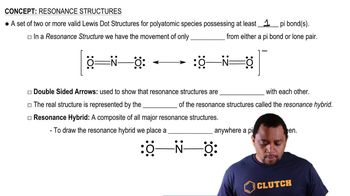
Resonance Structures

Interlayer Interactions

The interactions between the layers of graphite are primarily due to van der Waals forces, which are weak compared to covalent bonds. These forces arise from temporary dipoles that occur when electron distributions around atoms fluctuate. Understanding these interactions is crucial for explaining the physical properties of graphite, such as its electrical conductivity and lubricating ability.
Video consigliato:
Percorso guidato
03:01
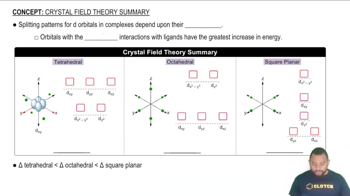
The greatest ligand-orbital interactions result in the greatest increase in energy.