Ch.2 - Atoms, Molecules, and Ions
Brown - Chemistry: The Central Science 14th Edition
Brown14th EditionChemistry: The Central ScienceISBN: 9780134414232Non è quello che usi tu?Cambia libro di testo
Capitolo 2, Problema 65e

Predict whether each of the following compounds is molecular or ionic: (e) TiCl4

Guida verificata passo dopo passo
1
Identify the types of elements in the compound: TiCl4 consists of titanium (Ti) and chlorine (Cl). Titanium is a metal, and chlorine is a nonmetal.
Understand the nature of bonding between metals and nonmetals: Typically, compounds formed between metals and nonmetals are ionic due to the transfer of electrons from the metal to the nonmetal.
Consider the oxidation states and electron configuration: Titanium in TiCl4 generally has an oxidation state of +4, and chlorine has an oxidation state of -1.
Analyze the compound's structure and properties: TiCl4 is a compound where titanium is surrounded by four chlorine atoms. Despite the typical ionic character between metals and nonmetals, the high oxidation state of titanium and the covalent character of the Ti-Cl bonds suggest a more complex bonding.
Conclude the type of compound: Given the covalent nature of the bonds and the molecular structure, TiCl4 is best classified as a molecular compound rather than an ionic compound.

Risposta video verificata per un problema simile:

Questa soluzione video è stata consigliata dai nostri tutor come utile per risolvere questo problema.
Durata del video:
2m

Concetti chiave

Ecco i concetti essenziali che devi comprendere per rispondere correttamente alla domanda.

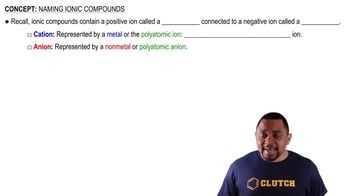
Ionic vs. Molecular Compounds

Ionic compounds are formed from the electrostatic attraction between positively and negatively charged ions, typically involving a metal and a non-metal. In contrast, molecular compounds consist of molecules formed by covalent bonds between non-metal atoms. Understanding the distinction between these two types of compounds is essential for predicting their properties and behaviors.
Video consigliato:
Percorso guidato
02:11
Ionic Compounds Naming

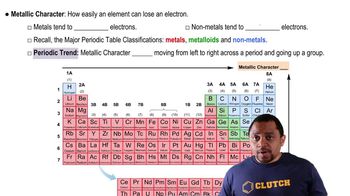
Metal and Non-Metal Classification

In the periodic table, metals are generally found on the left side and non-metals on the right. The classification of elements as metals or non-metals helps determine the type of bonding that will occur when they combine. For example, titanium (Ti) is a metal, while chlorine (Cl) is a non-metal, which suggests that their combination may lead to ionic bonding.
Video consigliato:
Percorso guidato
01:08
Metallic Character Trends

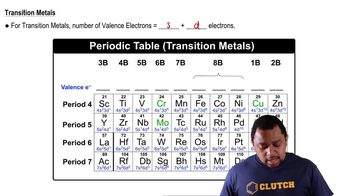
Valence Electrons and Bonding

Valence electrons are the outermost electrons of an atom and play a crucial role in chemical bonding. The number of valence electrons determines how an atom interacts with others, including whether it will lose, gain, or share electrons. In the case of TiCl4, the valence electron configuration of titanium and chlorine will influence whether the compound forms ionic or covalent bonds.
Video consigliato:
Percorso guidato
02:12
Transition Metals Valence Electrons