
Domanda del libro di testo
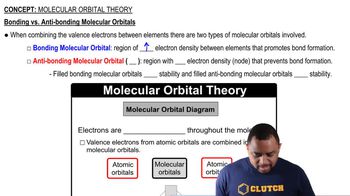
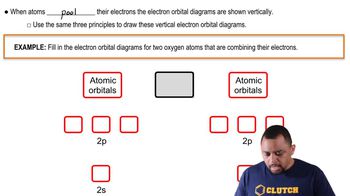
For each of these contour representations of molecular orbitals, identify (c) whether the MO is bonding or antibonding (i)
345
views


 Guida verificata passo dopo passo
 03:06
03:06
 01:51
01:51 02:32
02:32For each of these contour representations of molecular orbitals, identify (c) whether the MO is bonding or antibonding (i)
The molecule shown below is called furan. It is represented in typical shorthand way for organic molecules, with hydrogen atoms not shown, and each of the 4 vertices representing a carbon atom.
(e) The C—C—C bond angles in furan are much smaller than those in benzene. The likely reason is which of the following: (i) The hybridization of the carbon atoms in furan is different from that in benzene, (ii) Furan does not have another resonance structure equivalent to the one above, or (iii) The atoms in a five-membered ring are forced to adopt smaller angles than in a six-membered ring.
For each of these contour representations of molecular orbitals, identify (b) the type of MO (s or p) (iii)
For each of these contour representations of molecular orbitals, identify (a) the atomic orbitals (s or p) used to construct the MO (i)
The following is part of a molecular orbital energy-level diagram for MOs constructed from 1s atomic orbitals.
(a) What labels do we use for the two MOs shown?
For each of these contour representations of molecular orbitals, identify (b) the type of MO (s or p) (i)