Ch.20 - Nuclear Chemistry
McMurry - Chemistry 8th Edition
McMurry8th EditionChemistryISBN: 9781292336145Non è quello che usi tu?Cambia libro di testo
Capitolo 20, Problema 93

What are the benefits of using fusion over fission as a source of nuclear energy? Why have fusion reactors not been developed yet?

Guida verificata passo dopo passo
1
Understand the difference between nuclear fusion and fission: Nuclear fusion involves combining lighter atomic nuclei to form a heavier nucleus, releasing energy in the process. Nuclear fission, on the other hand, involves the splitting of a heavy nucleus into lighter nuclei, also releasing energy.
Identify the benefits of fusion: Fusion produces more energy per unit mass of fuel compared to fission. It also generates less radioactive waste and the primary fuel, isotopes of hydrogen, is abundant. Fusion does not carry the risk of a meltdown, making it potentially safer.
Recognize the challenges with fusion energy: Achieving and maintaining the extremely high temperatures and pressures needed for fusion to occur is technologically challenging. Fusion reactions require precise conditions, including confinement of plasma, which is difficult to achieve and maintain.
Explore why fusion reactors are not yet operational: The technology required to control fusion reactions efficiently and safely is still under development. The engineering challenges, such as sustaining the reaction over a long period and achieving a net energy gain, are still being addressed.
Consider the economic and research implications: The development of fusion reactors involves significant financial investment and extensive research. The complexity of the technology and the need for international collaboration also contribute to the slow progress in making fusion a practical energy source.

Risposta video verificata per un problema simile:

Questa soluzione video è stata consigliata dai nostri tutor come utile per risolvere questo problema.
Durata del video:
3m

Concetti chiave

Ecco i concetti essenziali che devi comprendere per rispondere correttamente alla domanda.

Nuclear Fusion

Nuclear fusion is the process where two light atomic nuclei combine to form a heavier nucleus, releasing a significant amount of energy. This reaction powers stars, including the sun, and has the potential to provide a nearly limitless and clean energy source on Earth. The primary fuels for fusion are isotopes of hydrogen, such as deuterium and tritium, which can produce energy without the long-lived radioactive waste associated with fission.
Video consigliato:
Percorso guidato
02:06
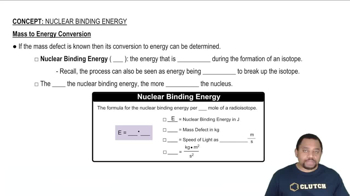
Nuclear Binding Energy

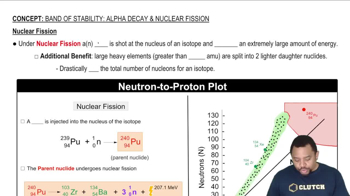
Nuclear Fission

Nuclear fission is the splitting of a heavy atomic nucleus into smaller nuclei, accompanied by the release of energy and neutrons. This process is utilized in current nuclear power plants, where uranium or plutonium isotopes are commonly used as fuel. While fission can generate substantial energy, it produces radioactive waste and poses risks of nuclear accidents, making fusion an attractive alternative.
Video consigliato:
Percorso guidato
03:29
Band of Stability: Nuclear Fission

Technical Challenges of Fusion Reactors

Despite the advantages of fusion, developing practical fusion reactors has proven challenging due to the extreme conditions required for the reaction to occur, such as high temperatures and pressures. Containing the hot plasma necessary for fusion without it cooling or escaping is a significant hurdle. Current experimental reactors, like ITER, are working towards achieving sustained fusion, but technological and engineering challenges remain, delaying commercial viability.
Video consigliato:
Percorso guidato
02:30
Entropy in Phase Changes Example