Ch.22 - Organic Chemistry
Tro - Chemistry: A Molecular Approach 6th Edition
Tro6th EditionChemistry: A Molecular ApproachISBN: 9780137832217Non è quello che usi tu?Cambia libro di testo
Capitolo 22, Problema 81a

Name each carboxylic acid or ester.

Guida verificata passo dopo passo
1
Identify the longest carbon chain that includes the carboxyl group (\(-COOH\)) for carboxylic acids or the ester group (\(-COOR\)) for esters.
For carboxylic acids, name the parent alkane chain by replacing the '-e' ending with '-oic acid'. For example, a three-carbon chain becomes 'propanoic acid'.
For esters, identify the alkyl group attached to the oxygen and name it first. Then, name the acid part by replacing the '-ic acid' ending of the corresponding carboxylic acid with '-ate'. For example, 'ethyl propanoate'.
Number the carbon atoms in the chain starting from the carboxyl carbon for acids or the carbonyl carbon for esters, if necessary, to identify any substituents.
Name and number any substituents on the carbon chain, and include them as prefixes in the name, ensuring to use the correct locants.

Risposta video verificata per un problema simile:

Questa soluzione video è stata consigliata dai nostri tutor come utile per risolvere questo problema.
Durata del video:
3m

Concetti chiave

Ecco i concetti essenziali che devi comprendere per rispondere correttamente alla domanda.

Carboxylic Acids

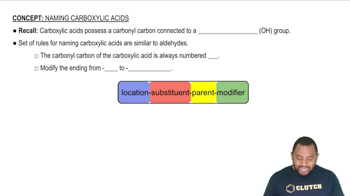
Carboxylic acids are organic compounds characterized by the presence of one or more carboxyl groups (-COOH). They are known for their acidic properties, which arise from the ability of the carboxyl group to donate a proton (H+) in solution. Common examples include acetic acid (found in vinegar) and benzoic acid. The naming convention typically involves identifying the longest carbon chain containing the carboxyl group and adding the suffix '-oic acid.'
Video consigliato:
Percorso guidato
00:55
Rules for Naming Carboxylic Acids

Esters

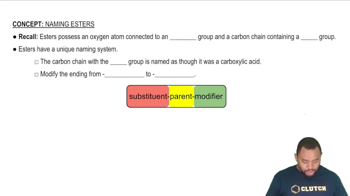
Esters are organic compounds formed from the reaction of an alcohol and a carboxylic acid, resulting in the replacement of the hydrogen in the carboxyl group with an alkyl group. They are often characterized by their pleasant fragrances and are commonly found in fruits and flowers. The naming of esters involves identifying the alkyl group from the alcohol and the acid part, leading to a name that ends with '-ate,' such as ethyl acetate.
Video consigliato:
Percorso guidato
00:59
Rules for Naming Esters

Nomenclature Rules

Nomenclature rules in organic chemistry provide a systematic way to name compounds based on their structure and functional groups. For carboxylic acids, the longest carbon chain containing the carboxyl group is identified, and the appropriate suffix is added. For esters, the names are derived from the alcohol and acid components, with specific endings. Understanding these rules is essential for accurately naming and identifying organic compounds.
Video consigliato:
Percorso guidato
00:28
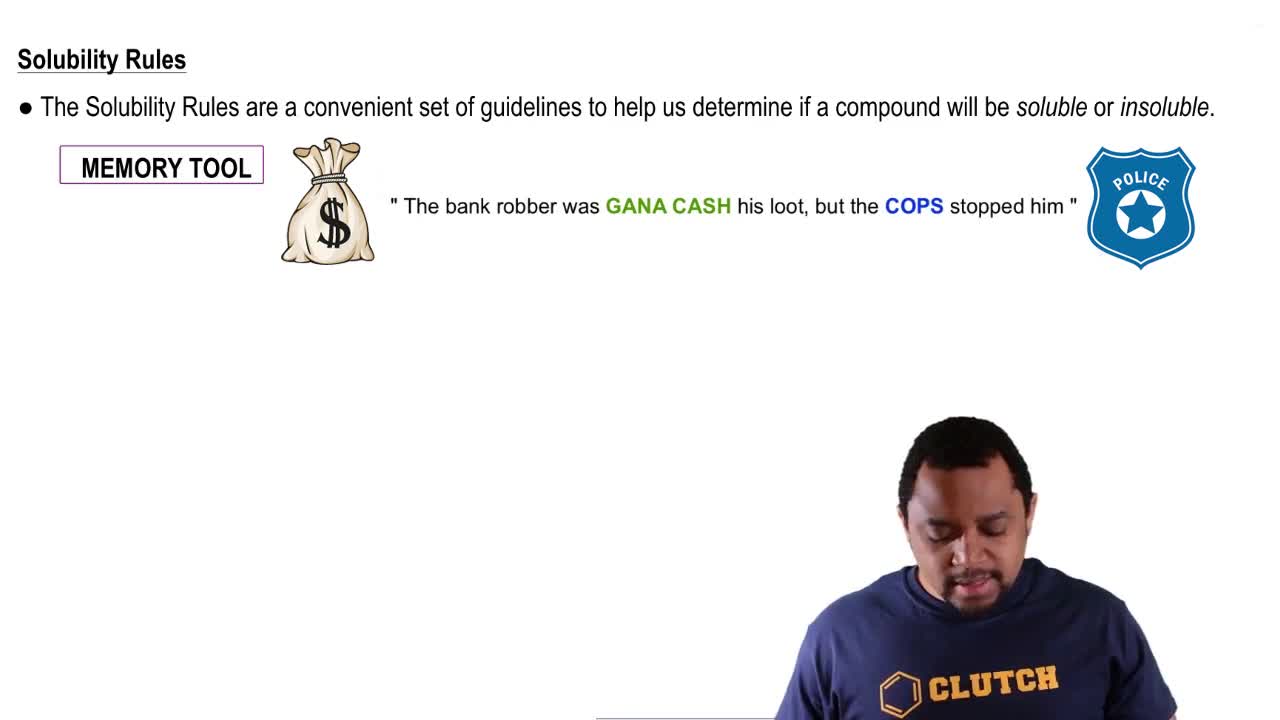
Solubility Rules