Ch. 16 - Regulation of Gene Expression in Eukaryotes
Klug - Essentials of Genetics 10th Edition
Klug10th EditionEssentials of GeneticsISBN: 9780135588789Non è quello che usi tu?Cambia libro di testo
Capitolo 16, Problema 3

What features of eukaryotes provide additional opportunities for the regulation of gene expression compared to bacteria?

Guida verificata passo dopo passo
1
Identify the key differences between eukaryotic and bacterial cells that affect gene expression regulation, focusing on cellular complexity and genome organization.
Explain how the presence of a nucleus in eukaryotes separates transcription and translation in time and space, allowing for additional regulatory steps such as RNA processing.
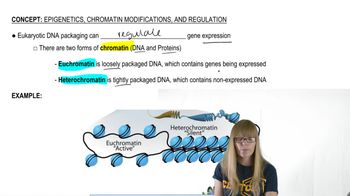
Discuss the role of chromatin structure in eukaryotes, including how DNA is wrapped around histones and how chromatin remodeling can regulate access to genes.
Describe the various levels of gene regulation unique to eukaryotes, such as alternative splicing, RNA editing, and the use of multiple transcription factors and enhancers.
Highlight the importance of post-transcriptional regulation in eukaryotes, including mRNA transport, stability, and translation control, which are less prominent or absent in bacteria.

Risposta video verificata per un problema simile:

Questa soluzione video è stata consigliata dai nostri tutor come utile per risolvere questo problema.
Durata del video:
38s

Concetti chiave

Ecco i concetti essenziali che devi comprendere per rispondere correttamente alla domanda.

Chromatin Structure and Remodeling

Eukaryotic DNA is packaged into chromatin, which regulates gene accessibility. Modifications like histone acetylation or methylation can open or compact chromatin, controlling transcription. This layer of regulation is absent in bacteria, providing eukaryotes with more complex gene expression control.
Video consigliato:

Transcriptional Regulation via Multiple Promoters and Enhancers

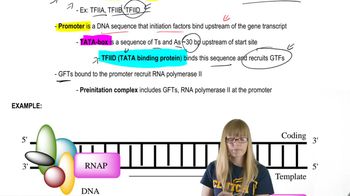
Eukaryotic genes often have multiple promoters and distant enhancers that interact through DNA looping, allowing precise spatial and temporal control of gene expression. Bacteria typically rely on simpler promoter structures, limiting regulatory complexity.
Video consigliato:
Percorso guidato
09:16
Eukaryotic Transcription

Post-Transcriptional Regulation

Eukaryotes regulate gene expression after transcription through processes like RNA splicing, editing, transport, and stability control. These mechanisms enable diverse protein products and fine-tuned expression, whereas bacteria have limited post-transcriptional regulation.
Video consigliato:
Percorso guidato
04:30
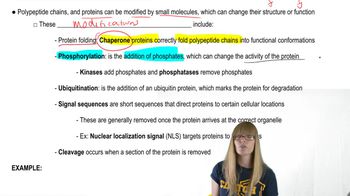
Post Translational Modifications