Ch. 26 - Population and Evolutionary Genetics
Klug - Concepts of Genetics 12th Edition
Klug12th EditionConcepts of GeneticsISBN: 9780135564776Non è quello che usi tu?Cambia libro di testo
Capitolo 26, Problema 4

The genetic difference between two Drosophila species, D. heteroneura and D. silvestris, as measured by nucleotide diversity, is about 1.8 percent. The difference between chimpanzees (Pan troglodytes) and humans (H. sapiens) is about the same, yet the latter species is classified in a different genera. In your opinion, is this valid? Explain why.

Guida verificata passo dopo passo
1
Step 1: Understand the concept of nucleotide diversity, which measures the percentage of nucleotide differences between two species' DNA sequences. Here, a 1.8% difference means that 1.8 out of every 100 nucleotides differ between the species compared.
Step 2: Recognize that taxonomic classification (such as genus and species) is based on multiple factors, including morphological traits, reproductive isolation, evolutionary history, and genetic differences, not solely on nucleotide diversity.
Step 3: Consider that although the nucleotide difference between Drosophila species and between humans and chimpanzees is similar (~1.8%), the evolutionary context and other biological factors differ. For example, humans and chimpanzees have distinct evolutionary lineages and reproductive barriers that justify their classification into different genera.
Step 4: Reflect on the fact that genetic distance alone does not determine taxonomic rank; the rate of evolution, functional differences, and ecological roles also influence classification decisions.
Step 5: Conclude that while nucleotide diversity provides useful information about genetic differences, it is not sufficient by itself to validate taxonomic distinctions such as genus separation. Therefore, the classification of humans and chimpanzees into different genera despite similar nucleotide differences to Drosophila species can be considered valid based on broader biological criteria.

Risposta video verificata per un problema simile:

Questa soluzione video è stata consigliata dai nostri tutor come utile per risolvere questo problema.
Durata del video:
21s

Concetti chiave

Ecco i concetti essenziali che devi comprendere per rispondere correttamente alla domanda.

Nucleotide Diversity

Nucleotide diversity measures the genetic variation between species by comparing differences in DNA sequences. It quantifies the percentage of nucleotide differences in homologous regions, reflecting evolutionary divergence. This metric helps assess how closely related two species are at the molecular level.
Video consigliato:
Percorso guidato
08:39
mRNA Processing

Taxonomic Classification and Species Concepts

Taxonomy classifies organisms based on shared characteristics and evolutionary relationships, not solely on genetic distance. Species and genera distinctions consider morphology, reproductive isolation, ecological roles, and evolutionary history, which can lead to different classifications despite similar genetic differences.
Video consigliato:

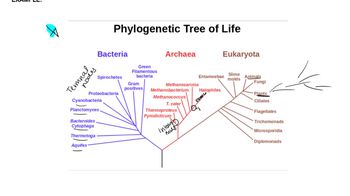
Evolutionary and Phylogenetic Context

Genetic differences must be interpreted within evolutionary and phylogenetic frameworks. Similar nucleotide divergence can represent different evolutionary timescales or selective pressures, influencing how species are grouped. Thus, genetic distance alone does not determine taxonomic rank without considering lineage and speciation events.
Video consigliato:
Percorso guidato
08:16
Phylogenetic Trees
Pratica correlata
Domanda del libro di testo

Price et al. [(1999). J. Bacteriol. 181:2358–2362] conducted a genetic study of the toxin transport protein (PA) of Bacillus anthracis, the bacterium that causes anthrax in humans. Within the 2294-nucleotide gene in 26 strains they identified five point mutations—two missense and three synonyms—among different isolates. Necropsy samples from an anthrax outbreak in 1979 revealed a novel missense mutation and five unique nucleotide changes among ten victims. The authors concluded that these data indicate little or no horizontal transfer between different B. anthracis strains.

Which types of nucleotide changes (missense or synonyms) cause amino acid changes?

489
views
Domanda del libro di testo

Price et al. [(1999). J. Bacteriol. 181:2358–2362] conducted a genetic study of the toxin transport protein (PA) of Bacillus anthracis, the bacterium that causes anthrax in humans. Within the 2294-nucleotide gene in 26 strains they identified five point mutations—two missense and three synonyms—among different isolates. Necropsy samples from an anthrax outbreak in 1979 revealed a novel missense mutation and five unique nucleotide changes among ten victims. The authors concluded that these data indicate little or no horizontal transfer between different B. anthracis strains.

On what basis did the authors conclude that evidence of horizontal transfer is absent from their data?

468
views
Domanda del libro di testo

Consider rare disorders in a population caused by an autosomal recessive mutation. From the frequencies of the disorder in the population given, calculate the percentage of heterozygous carriers:

0.000081

430
views
Domanda del libro di testo

Price et al. [(1999). J. Bacteriol. 181:2358–2362] conducted a genetic study of the toxin transport protein (PA) of Bacillus anthracis, the bacterium that causes anthrax in humans. Within the 2294-nucleotide gene in 26 strains they identified five point mutations—two missense and three synonyms—among different isolates. Necropsy samples from an anthrax outbreak in 1979 revealed a novel missense mutation and five unique nucleotide changes among ten victims. The authors concluded that these data indicate little or no horizontal transfer between different B. anthracis strains.

What is meant by 'horizontal transfer'?

452
views
Domanda del libro di testo

The use of nucleotide sequence data to measure genetic variability is complicated by the fact that the genes of many eukaryotes are complex in organization and contain 5' and 3' flanking regions as well as introns. Researchers have compared the nucleotide sequence of two cloned alleles of the γ-globin gene from a single individual and found a variation of 1 percent. Those differences include 13 substitutions of one nucleotide for another and three short DNA segments that have been inserted in one allele or deleted in the other. None of the changes takes place in the gene's exons (coding regions). Why do you think this is so, and should it change our concept of genetic variation?

474
views
Domanda del libro di testo

Consider rare disorders in a population caused by an autosomal recessive mutation. From the frequencies of the disorder in the population given, calculate the percentage of heterozygous carriers:

0.0064

464
views