Ch. 1 - The Molecular Basis of Heredity, Variation, and Evolution
Sanders - Genetic Analysis: An Integrated Approach 3rd Edition
Sanders3rd EditionGenetic Analysis: An Integrated ApproachISBN: 9780135564172Non è quello che usi tu?Cambia libro di testo
Capitolo 1, Problema 6

Define the terms genotype and phenotype, and relate them to one another.

Guida verificata passo dopo passo
1
Define the term 'genotype': The genotype refers to the genetic makeup of an organism, specifically the set of alleles (variations of a gene) that an organism inherits from its parents. For example, if a gene has two alleles, A and a, the genotype could be AA, Aa, or aa.
Define the term 'phenotype': The phenotype refers to the observable physical or physiological traits of an organism, which result from the expression of the genotype in combination with environmental factors. For example, traits like eye color, height, or blood type are phenotypes.
Explain the relationship between genotype and phenotype: The genotype provides the instructions for the development of the phenotype. Genes are expressed through processes like transcription and translation, leading to the production of proteins that influence traits.
Discuss the role of dominance and environmental factors: Dominant and recessive alleles can affect how the genotype translates into the phenotype. Additionally, environmental factors (e.g., nutrition, temperature) can influence the phenotype, even if the genotype remains the same.
Provide an example to illustrate the relationship: For instance, in pea plants, the genotype 'TT' or 'Tt' (where T is dominant for tallness) results in the phenotype of a tall plant, while the genotype 'tt' (homozygous recessive) results in a short plant.

Risposta video verificata per un problema simile:

Questa soluzione video è stata consigliata dai nostri tutor come utile per risolvere questo problema.
Durata del video:
1m

Concetti chiave

Ecco i concetti essenziali che devi comprendere per rispondere correttamente alla domanda.

Genotype

The genotype refers to the genetic constitution of an organism, encompassing all the alleles inherited from its parents. It is the specific set of genes that an individual carries, which can influence various traits. Genotypes are often represented using letters, such as 'AA', 'Aa', or 'aa', indicating dominant and recessive alleles.
Video consigliato:
Percorso guidato
07:52
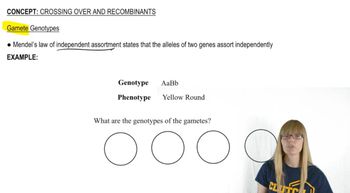
Gamete Genotypes

Phenotype

The phenotype is the observable physical and physiological traits of an organism, resulting from the interaction of its genotype with the environment. This includes characteristics such as height, eye color, and behavior. While the genotype provides the potential for these traits, the phenotype is the actual expression, which can vary due to environmental factors.
Video consigliato:
Percorso guidato
10:48
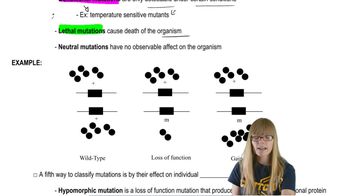
Mutations and Phenotypes

Relationship between Genotype and Phenotype

The relationship between genotype and phenotype is fundamental in genetics, as the genotype determines the potential traits an organism can express, while the phenotype is the manifestation of those traits. Environmental influences can modify how a genotype is expressed, leading to variations in phenotype. Understanding this relationship is crucial for studying inheritance and evolution.
Video consigliato:
Percorso guidato
07:52
Gamete Genotypes