Ch. 10 - Eukaryotic Chromosome Abnormalities and Molecular Organization
Sanders - Genetic Analysis: An Integrated Approach 3rd Edition
Sanders3rd EditionGenetic Analysis: An Integrated ApproachISBN: 9780135564172Non è quello che usi tu?Cambia libro di testo
Capitolo 10, Problema 1h

Give descriptions for the following terms:
Chromosome territory

Guida verificata passo dopo passo
1
Understand that a chromosome territory refers to the specific, non-overlapping region of the nucleus occupied by an individual chromosome during interphase of the cell cycle.
Learn that chromosome territories are not randomly distributed; instead, they are organized in a way that reflects the functional needs of the cell, such as gene expression and DNA replication.
Recognize that the positioning of chromosome territories can influence interactions between different chromosomes and the accessibility of certain genes to the transcriptional machinery.
Note that chromosome territories were first observed using advanced microscopy techniques, such as fluorescence in situ hybridization (FISH), which allowed scientists to visualize the spatial arrangement of chromosomes within the nucleus.
Understand that the concept of chromosome territories highlights the importance of nuclear architecture in regulating genetic processes and maintaining genomic stability.

Risposta video verificata per un problema simile:

Questa soluzione video è stata consigliata dai nostri tutor come utile per risolvere questo problema.
Durata del video:
2m

Concetti chiave

Ecco i concetti essenziali che devi comprendere per rispondere correttamente alla domanda.

Chromosome Territory

Chromosome territories refer to the distinct, non-overlapping regions within the nucleus of a cell where individual chromosomes are located. This spatial organization allows for efficient gene expression and regulation, as each chromosome occupies a specific area, minimizing interference with neighboring chromosomes.
Video consigliato:
Percorso guidato
07:10
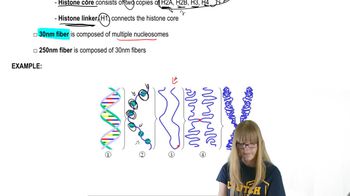
Chromosome Structure

Nuclear Architecture

Nuclear architecture describes the structural organization of the nucleus, including the arrangement of chromosomes, nuclear pores, and other components. This architecture is crucial for maintaining genomic stability and facilitating processes such as transcription, replication, and DNA repair by ensuring that the necessary elements are in proximity.
Video consigliato:
Percorso guidato
03:46
Drosophilia Development

Gene Expression Regulation

Gene expression regulation involves the mechanisms that control the timing and amount of gene expression. Chromosome territories play a role in this process by positioning genes in a way that can either promote or inhibit their transcription, depending on their location within the nucleus and their interaction with regulatory elements.
Video consigliato:
Percorso guidato
02:09
Penetrance and Expressivity