Ch. 14 - Analysis of Gene Function via Forward Genetics and Reverse Genetics
Sanders - Genetic Analysis: An Integrated Approach 3rd Edition
Sanders3rd EditionGenetic Analysis: An Integrated ApproachISBN: 9780135564172Non è quello che usi tu?Cambia libro di testo
Capitolo 14, Problema C.4b

Explain the following processes involving chromosome mutations and cancer development.
How the chromosome mutation producing Burkitt lymphoma generates the disease.

Guida verificata passo dopo passo
1
Understand that Burkitt lymphoma is a type of cancer caused by a specific chromosomal mutation known as a translocation, which involves the exchange of genetic material between chromosomes.
Identify the chromosomes involved in Burkitt lymphoma, typically a translocation between chromosome 8 and chromosome 14, denoted as t(8;14).
Recognize that this translocation places the MYC gene from chromosome 8 next to the immunoglobulin heavy chain gene on chromosome 14, leading to overexpression of the MYC oncogene.
Explain that the overexpression of the MYC gene causes uncontrolled cell division and proliferation, which is a hallmark of cancer development, specifically leading to the formation of Burkitt lymphoma.
Summarize that the chromosomal mutation disrupts normal gene regulation, turning a proto-oncogene into an oncogene, thereby driving the malignant transformation of B cells in the lymphatic system.

Risposta video verificata per un problema simile:

Questa soluzione video è stata consigliata dai nostri tutor come utile per risolvere questo problema.
Durata del video:
2m

Concetti chiave

Ecco i concetti essenziali che devi comprendere per rispondere correttamente alla domanda.

Chromosome Mutations

Chromosome mutations involve structural changes in chromosomes, such as translocations, deletions, or duplications. These alterations can disrupt gene function or regulation, potentially leading to abnormal cell behavior. Understanding these mutations is essential to grasp how genetic changes contribute to diseases like cancer.
Video consigliato:
Percorso guidato
10:48
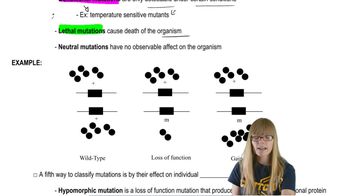
Mutations and Phenotypes

Burkitt Lymphoma and Chromosomal Translocation

Burkitt lymphoma is caused by a specific chromosomal translocation, typically t(8;14), which moves the MYC oncogene next to the immunoglobulin heavy chain gene. This translocation leads to overexpression of MYC, a gene that promotes cell proliferation, driving uncontrolled growth of B cells and resulting in lymphoma.
Video consigliato:
Percorso guidato
12:42
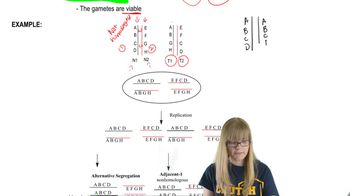
Reciprocal Translocation

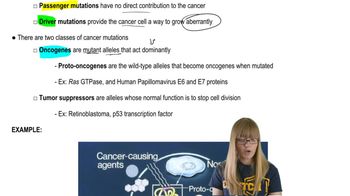
Oncogenes and Cancer Development

Oncogenes are mutated or abnormally expressed genes that drive cancer progression by promoting cell division and survival. When chromosome mutations activate oncogenes like MYC, they disrupt normal cell cycle control, leading to unchecked cell growth and tumor formation, as seen in cancers such as Burkitt lymphoma.
Video consigliato:
Percorso guidato
04:46
Cancer Mutations