Ch. 16 - Genomics: Genetics from a Whole-Genome Perspective
Sanders - Genetic Analysis: An Integrated Approach 3rd Edition
Sanders3rd EditionGenetic Analysis: An Integrated ApproachISBN: 9780135564172Non è quello che usi tu?Cambia libro di testo
Capitolo 16, Problema 2b

Repetitive DNA poses problems for genome sequencing. What types of repetitive DNA are most problematic?

Guida verificata passo dopo passo
1
Understand the concept of repetitive DNA: Repetitive DNA refers to sequences in the genome that are repeated multiple times. These sequences can vary in length and complexity, and they are often challenging to sequence accurately due to their repetitive nature.
Identify the types of repetitive DNA: The most problematic types of repetitive DNA include tandem repeats (e.g., microsatellites and minisatellites) and interspersed repeats (e.g., transposable elements like LINEs and SINEs). Tandem repeats consist of sequences repeated in a head-to-tail manner, while interspersed repeats are scattered throughout the genome.
Explore why tandem repeats are problematic: Tandem repeats can cause issues during sequencing because their repetitive nature can lead to misalignment of reads, making it difficult to determine the exact number of repeats or their precise location in the genome.
Examine the challenges posed by interspersed repeats: Interspersed repeats, such as transposable elements, can complicate genome assembly because they are often identical or highly similar to one another. This similarity can result in ambiguous mapping of sequencing reads, leading to gaps or errors in the assembled genome.
Consider the implications for genome sequencing technologies: Repetitive DNA requires advanced sequencing technologies and bioinformatics tools to resolve these challenges. Techniques like long-read sequencing (e.g., PacBio or Oxford Nanopore) and algorithms designed for repeat resolution are often employed to improve accuracy in sequencing repetitive regions.

Risposta video verificata per un problema simile:

Questa soluzione video è stata consigliata dai nostri tutor come utile per risolvere questo problema.
Durata del video:
2m

Concetti chiave

Ecco i concetti essenziali che devi comprendere per rispondere correttamente alla domanda.

Types of Repetitive DNA

Repetitive DNA can be classified into two main types: tandem repeats and interspersed repeats. Tandem repeats consist of sequences that are repeated directly adjacent to each other, such as microsatellites and minisatellites. Interspersed repeats, on the other hand, are scattered throughout the genome and include transposable elements like LINEs and SINEs. Both types can complicate genome sequencing due to their repetitive nature, making it difficult to accurately assemble and map the genome.
Video consigliato:
Percorso guidato
01:45
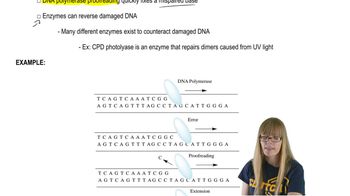
DNA Proofreading

Challenges in Genome Sequencing

Genome sequencing involves determining the exact order of nucleotides in a DNA molecule. Repetitive DNA sequences can lead to ambiguities during sequencing, as the sequencing technology may struggle to distinguish between identical or nearly identical sequences. This can result in gaps, misassemblies, or incorrect interpretations of the genome, particularly in regions with high levels of repetition, which are often found in complex genomes.
Video consigliato:
Percorso guidato
08:41
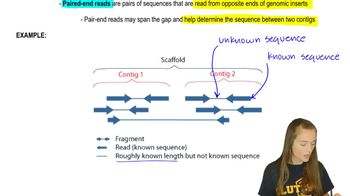
Sequencing Difficulties

Impact on Genetic Research

The presence of repetitive DNA can significantly impact genetic research and the understanding of genomic functions. Regions with high repetitive content may harbor important regulatory elements or contribute to genetic diversity, but their complexity can hinder the identification of genes and regulatory networks. Consequently, researchers must develop specialized techniques and algorithms to effectively analyze and interpret these challenging regions in genomic studies.
Video consigliato:
Percorso guidato
11:35
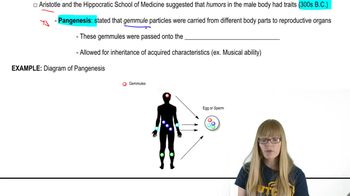
History of Genetics