Ch. 18 - Developmental Genetics
Sanders - Genetic Analysis: An Integrated Approach 3rd Edition
Sanders3rd EditionGenetic Analysis: An Integrated ApproachISBN: 9780135564172Non è quello che usi tu?Cambia libro di testo
Capitolo 18, Problema 1

Explain why many developmental genes encode either transcription factors or signaling molecules.

Guida verificata passo dopo passo
1
span>Developmental genes play a crucial role in the growth and formation of an organism. They often encode transcription factors or signaling molecules because these components are essential in regulating gene expression and cell communication during development.
span>Transcription factors are proteins that bind to specific DNA sequences, controlling the transcription of genetic information from DNA to mRNA. By doing so, they regulate the expression of genes that are necessary for various developmental processes.
span>Signaling molecules, on the other hand, are involved in cell signaling pathways. They help cells communicate with each other to coordinate complex processes such as cell differentiation, growth, and pattern formation during development.
span>Both transcription factors and signaling molecules are integral to the precise spatial and temporal regulation of gene expression, which is necessary for the proper development of tissues and organs.
span>In summary, the encoding of transcription factors and signaling molecules by developmental genes ensures that the right genes are expressed at the right time and place, facilitating the intricate process of development.

Risposta video verificata per un problema simile:

Questa soluzione video è stata consigliata dai nostri tutor come utile per risolvere questo problema.
Durata del video:
2m

Concetti chiave

Ecco i concetti essenziali che devi comprendere per rispondere correttamente alla domanda.

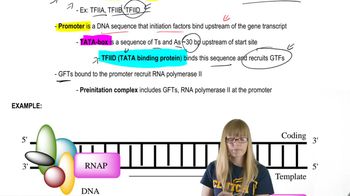
Transcription Factors

Transcription factors are proteins that bind to specific DNA sequences to regulate the transcription of genes. They play a crucial role in controlling gene expression during development by activating or repressing target genes. This regulation is essential for orchestrating the complex processes of cell differentiation and organ formation.
Video consigliato:
Percorso guidato
09:16
Eukaryotic Transcription

Signaling Molecules

Signaling molecules, such as hormones and growth factors, are crucial for communication between cells. They bind to receptors on target cells, triggering pathways that influence gene expression and cellular behavior. In development, these molecules help coordinate the activities of different cell types, ensuring that tissues and organs develop in a synchronized manner.
Video consigliato:
Percorso guidato
08:55
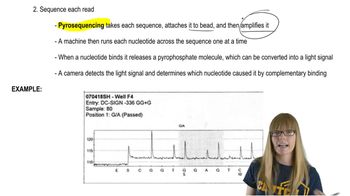
Sequencing Overview

Gene Regulation in Development

Gene regulation in development involves the precise control of when and where genes are expressed. This regulation is vital for the proper formation of an organism, as it determines cell fate and function. Both transcription factors and signaling molecules are key players in this process, allowing cells to respond to internal and external cues during development.
Video consigliato:
Percorso guidato
08:30
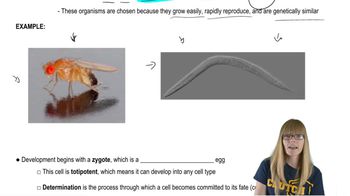
Genetics of Development
Pratica correlata
Domanda del libro di testo

How is positional information provided along the anterior–posterior axis in Drosophila? What are the functions of bicoid and nanos?

515
views
Domanda del libro di testo

Early development in Drosophila is atypical in that pattern formation takes place in a syncytial blastoderm, allowing free diffusion of transcription factors between nuclei. In many other animal species, the fertilized egg is divided by cellular cleavages into a larger and larger number of smaller and smaller cells.

What constraints does the formation of a syncytial blastoderm impose on the mechanisms of pattern formation?

410
views
Domanda del libro di testo

Bird beaks develop from an embryonic group of cells called neural crest cells that are part of the neural tube, which gives rise to the spinal column and related structures. Amazingly, neural crest cells can be surgically transplanted from one embryo to another, even between embryos of different species. When quail neural crest cells were transplanted into duck embryos, the beak of the host embryo developed into a shape similar to that found in quails, creating the 'quck.' Duck cells were recruited in addition to the quail cells to form part of the quck beak. Conversely, when duck neural crest cells were transplanted into quail embryos, the beak of the embryo resembled that of a duck, creating a 'duail,' and quail cells were recruited to form part of the beak. What do these experiments tell you about the autonomy or nonautonomy of the transplanted and host cells during beak development?

426
views