Ch. 20 - Population Genetics and Evolution at the Population, Species, and Molecular Levels
Sanders - Genetic Analysis: An Integrated Approach 3rd Edition
Sanders3rd EditionGenetic Analysis: An Integrated ApproachISBN: 9780135564172Non è quello che usi tu?Cambia libro di testo
Capitolo 20, Problema D.1

Why might mitochondrial, Y chromosome, and autosomal DNA provide different perspectives on our evolutionary past, for example, with respect to our relationship with Neanderthals?

Guida verificata passo dopo passo
1
Understand that mitochondrial DNA (mtDNA), Y chromosome DNA, and autosomal DNA are inherited differently: mtDNA is maternally inherited, Y chromosome DNA is paternally inherited, and autosomal DNA is inherited from both parents.
Recognize that because mtDNA and Y chromosome DNA do not undergo recombination (or very little), they trace direct maternal and paternal lineages respectively, providing a more linear and specific ancestral path.
Note that autosomal DNA recombines every generation, mixing genetic material from all ancestors, which offers a broader and more complex picture of ancestry and gene flow, including interbreeding events.
Consider that differences in inheritance patterns mean mtDNA and Y chromosome analyses might miss some gene flow events that autosomal DNA can detect, such as interbreeding between modern humans and Neandertals.
Conclude that these different types of DNA provide complementary perspectives: mtDNA and Y chromosome DNA highlight direct maternal and paternal lineages, while autosomal DNA reveals the overall genetic contributions from multiple ancestors, including admixture with Neandertals.

Risposta video verificata per un problema simile:

Questa soluzione video è stata consigliata dai nostri tutor come utile per risolvere questo problema.
Durata del video:
2m

Concetti chiave

Ecco i concetti essenziali che devi comprendere per rispondere correttamente alla domanda.

Mitochondrial DNA Inheritance

Mitochondrial DNA (mtDNA) is inherited exclusively from the mother and does not recombine, providing a direct maternal lineage. This makes mtDNA useful for tracing maternal ancestry and evolutionary history, but it represents only a small fraction of the genome and one lineage path.
Video consigliato:
Percorso guidato
05:13
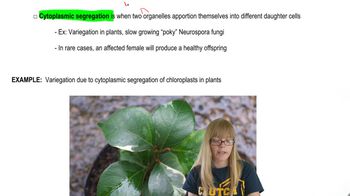
Organelle Inheritance

Y Chromosome Inheritance

The Y chromosome is passed from father to son and also does not undergo recombination over most of its length. It traces paternal lineage, offering insights into male-specific ancestry and population history, which can differ from maternal or autosomal perspectives.
Video consigliato:
Percorso guidato
10:35
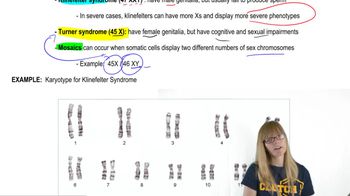
Human Sex Chromosomes

Autosomal DNA and Recombination

Autosomal DNA is inherited from both parents and undergoes recombination each generation, mixing genetic material from many ancestors. This provides a more comprehensive and complex picture of ancestry and evolutionary relationships, including admixture events like interbreeding with Neandertals.
Video consigliato:
Percorso guidato
03:51
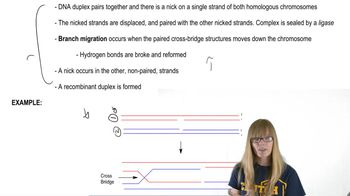
Recombination after Single Strand Breaks