Ch. 7 - DNA Structure and Replication
Sanders - Genetic Analysis: An Integrated Approach 3rd Edition
Sanders3rd EditionGenetic Analysis: An Integrated ApproachISBN: 9780135564172Non è quello che usi tu?Cambia libro di testo
Capitolo 7, Problema 23

Why do the genomes of eukaryotes, such as Drosophila, need to have multiple origins of replication, whereas bacterial genomes, such as that of E. coli, have only a single origin?

Guida verificata passo dopo passo
1
Eukaryotic genomes, such as those of Drosophila, are significantly larger and more complex than bacterial genomes, such as that of E. coli. This means that the total amount of DNA that needs to be replicated is much greater in eukaryotes.
Replication of DNA occurs at a specific site called the origin of replication. In bacteria like E. coli, the genome is circular and relatively small, so a single origin of replication is sufficient to replicate the entire genome efficiently within the time available for cell division.
In contrast, eukaryotic genomes are linear and consist of multiple chromosomes, each of which is much larger than a bacterial genome. If eukaryotes had only a single origin of replication per chromosome, the replication process would take an unreasonably long time to complete.
To ensure that the entire genome is replicated in a timely manner, eukaryotic chromosomes have multiple origins of replication. This allows replication to occur simultaneously at multiple sites, significantly speeding up the process.
The presence of multiple origins of replication in eukaryotes is also important for ensuring that replication is completed accurately and efficiently, as it reduces the risk of incomplete replication, which could lead to genomic instability or cell death.

Risposta video verificata per un problema simile:

Questa soluzione video è stata consigliata dai nostri tutor come utile per risolvere questo problema.
Durata del video:
1m

Concetti chiave

Ecco i concetti essenziali che devi comprendere per rispondere correttamente alla domanda.

Eukaryotic Genome Structure

Eukaryotic genomes, like those of Drosophila, are typically larger and more complex than prokaryotic genomes. They contain multiple linear chromosomes, which necessitate multiple origins of replication to ensure that DNA replication occurs efficiently and completely within the limited time of the cell cycle.
Video consigliato:
Percorso guidato
07:10
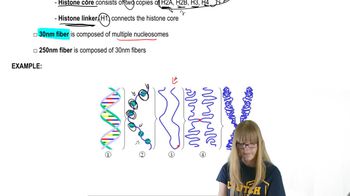
Chromosome Structure

Prokaryotic Genome Structure

Prokaryotic genomes, such as that of E. coli, are usually smaller and consist of a single circular chromosome. This simpler structure allows for a single origin of replication, which is sufficient to replicate the entire genome efficiently, as the replication process can proceed bidirectionally from that single point.
Video consigliato:
Percorso guidato
10:14
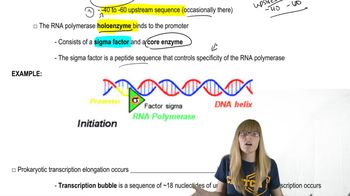
Prokaryotic Transcription

DNA Replication Mechanism

DNA replication in both eukaryotes and prokaryotes involves the unwinding of the double helix and synthesis of new strands. However, eukaryotic cells require multiple origins of replication to manage the larger amount of DNA and to coordinate replication with cell division, while prokaryotes can complete replication from a single origin due to their streamlined genome.
Video consigliato:
Percorso guidato
11:59
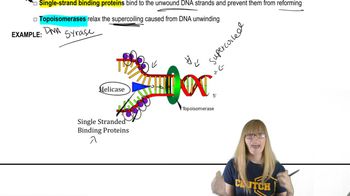
Steps to DNA Replication