Ch. 8 - Molecular Biology of Transcription and RNA Processing
Sanders - Genetic Analysis: An Integrated Approach 3rd Edition
Sanders3rd EditionGenetic Analysis: An Integrated ApproachISBN: 9780135564172Non è quello che usi tu?Cambia libro di testo
Capitolo 8, Problema 1a

What is a gene?

Guida verificata passo dopo passo
1
A gene is a fundamental unit of heredity in living organisms, responsible for encoding the information necessary to produce proteins or functional RNA molecules.
Genes are composed of DNA (deoxyribonucleic acid) sequences, which are organized into specific regions on chromosomes.
Each gene contains regulatory regions (such as promoters and enhancers) that control its expression, as well as coding regions (exons) and non-coding regions (introns).
The information in a gene is transcribed into messenger RNA (mRNA) through the process of transcription, and this mRNA is then translated into a protein during translation.
Genes play a critical role in determining the traits and functions of an organism, and variations in genes can lead to differences in phenotypes or genetic disorders.

Risposta video verificata per un problema simile:

Questa soluzione video è stata consigliata dai nostri tutor come utile per risolvere questo problema.
Durata del video:
2m

Concetti chiave

Ecco i concetti essenziali che devi comprendere per rispondere correttamente alla domanda.

Definition of a Gene

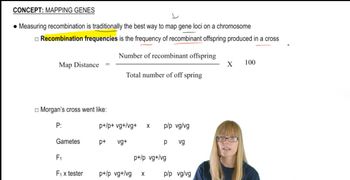
A gene is a fundamental unit of heredity in living organisms, composed of DNA. It serves as a blueprint for the synthesis of proteins, which perform various functions in the body. Genes are located on chromosomes and can influence traits and characteristics passed from parents to offspring.
Video consigliato:

Structure of DNA

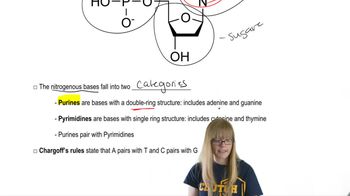
DNA, or deoxyribonucleic acid, is the molecule that carries genetic information. It consists of two strands forming a double helix, with nucleotides as its building blocks. Each nucleotide contains a sugar, a phosphate group, and a nitrogenous base, which sequences determine the genetic code and the function of genes.
Video consigliato:

Gene Expression

Gene expression is the process by which information from a gene is used to synthesize functional gene products, typically proteins. This process involves two main steps: transcription, where the DNA sequence is copied into messenger RNA (mRNA), and translation, where the mRNA is used to assemble amino acids into proteins. Regulation of gene expression is crucial for cellular function and adaptation.
Video consigliato:
Percorso guidato
02:09
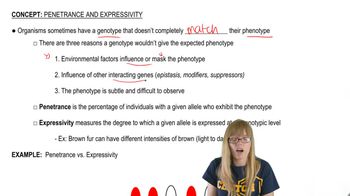
Penetrance and Expressivity