Ch.10 Proteins Workers of the Cell
Frost - General, Organic and Biological Chemistry 4th Edition
Frost4th EditionGeneral, Organic and Biological ChemistryISBN: 9780134988696Non è quello che usi tu?Cambia libro di testo
Capitolo 6, Problema 1b

Draw the structure for each of the following amino acids and put an asterisk (*) next to any chiral carbon centers in your structure:
b. lysine

Guida verificata passo dopo passo
1
Step 1: Understand the structure of lysine. Lysine is an amino acid with the molecular formula C6H14N2O2. It contains an amino group (-NH2), a carboxyl group (-COOH), and a side chain with a long aliphatic chain ending in another amino group (-CH2-CH2-CH2-CH2-NH2).
Step 2: Draw the backbone structure of lysine. Start with the central alpha carbon (Cα) bonded to the amino group (-NH2), the carboxyl group (-COOH), a hydrogen atom, and the side chain (-CH2-CH2-CH2-CH2-NH2).
Step 3: Identify the chiral carbon. A chiral carbon is a carbon atom bonded to four different groups. In lysine, the alpha carbon (Cα) is bonded to the amino group, carboxyl group, hydrogen atom, and the side chain, making it a chiral center. Place an asterisk (*) next to the alpha carbon in your structure.
Step 4: Complete the structure by ensuring all bonds are correctly drawn and the side chain is fully represented. The side chain consists of four methylene groups (-CH2-) followed by a terminal amino group (-NH2).
Step 5: Double-check your structure for accuracy. Ensure the alpha carbon is marked as chiral with an asterisk (*) and confirm that all functional groups are correctly positioned and labeled.

Risposta video verificata per un problema simile:

Questa soluzione video è stata consigliata dai nostri tutor come utile per risolvere questo problema.
Durata del video:
3m

Concetti chiave

Ecco i concetti essenziali che devi comprendere per rispondere correttamente alla domanda.

Amino Acid Structure

Amino acids are organic compounds that serve as the building blocks of proteins. Each amino acid consists of a central carbon atom (the alpha carbon) bonded to an amino group (-NH2), a carboxyl group (-COOH), a hydrogen atom, and a variable side chain (R group) that determines the specific properties of the amino acid.
Video consigliato:
Percorso guidato
3:03
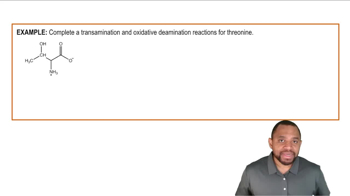
Amino Acid Catabolism: Amino Group Example 2

Chirality

Chirality refers to the geometric property of a molecule having a non-superimposable mirror image, much like left and right hands. In amino acids, chirality is often associated with the presence of a chiral carbon atom, which is a carbon atom bonded to four different groups. This property is crucial in biochemistry, as the chirality of amino acids can affect protein structure and function.
Video consigliato:
Percorso guidato
1:39
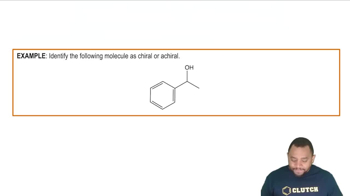
Chirality Example 1

Lysine Structure

Lysine is an essential amino acid characterized by its side chain containing an additional amino group, making it a positively charged molecule at physiological pH. The structure of lysine includes a chiral center at the alpha carbon, and it is important to identify this chiral center when drawing its structure, as it influences the amino acid's interactions and roles in proteins.
Video consigliato:
Percorso guidato
1:01
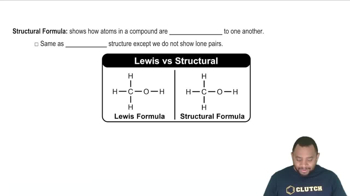
Structural Formula Concept 2