
Domanda del libro di testo
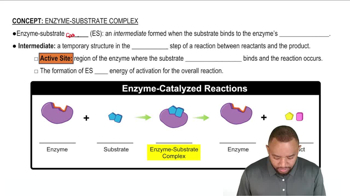
The enzyme sucrase catalyzes the hydrolysis of the disaccharide sucrose but not the disaccharide lactose. Does the induced-fit or lock-and-key model explain the action of sucrase better? Explain.
833
views
 Guida verificata passo dopo passo
 2:32
2:32
 2:41
2:41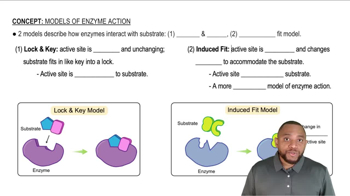 2:39
2:39The enzyme sucrase catalyzes the hydrolysis of the disaccharide sucrose but not the disaccharide lactose. Does the induced-fit or lock-and-key model explain the action of sucrase better? Explain.
A substrate is held in the active site of an enzyme by attractive forces between the substrate and the amino acid side chains. For the outlined regions A, B, and C on the following substrate molecule:
b. Could the amino acids serine, lysine, or glutamate be present in the active site? Support your answer.
The enzyme trypsin catalyzes the breakdown of many structurally diverse proteins in foods. Does the induced-fit or lock-and-key model explain the action of trypsin better? Explain.
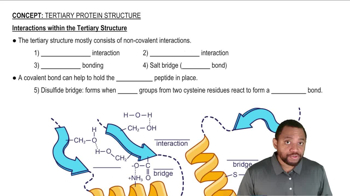
Do the amino acids that are in the active site of an enzyme have to be near each other in the enzyme’s primary structure? If no, explain.
Does each of the following statements describe a simple enzyme (no cofactor or coenzyme necessary), an enzyme that requires a cofactor, or an enzyme that requires a coenzyme?
c. contains vitamin B6 in its active site
Does each of the following statements describe a simple enzyme (no cofactor or coenzyme necessary), an enzyme that requires a cofactor, or an enzyme that requires a coenzyme?
b. consists of one polypeptide chain in its active form