Ch.1 Matter and Measurements
McMurry - Fundamentals of General, Organic, and Biological Chemistry 8th Edition
McMurry8th EditionFundamentals of General, Organic, and Biological ChemistryISBN: 9780134015187Non è quello che usi tu?Cambia libro di testo
Capitolo 1, Problema 42

Which of these terms, (i) mixture, (ii) solid, (iii) liquid, (iv) gas, (v) chemical element, (vi) chemical compound, applies to the following substances at room temperature?
a. Gasoline
b. Iodine
c. Water
d. Air
e. Blood
f. Sodium bicarbonate
g. Gaseous ammonia
h. Silicon

Guida verificata passo dopo passo
1
Step 1: Understand the definitions of the terms provided in the problem. A 'mixture' is a combination of two or more substances that are not chemically bonded. A 'solid' has a definite shape and volume. A 'liquid' has a definite volume but takes the shape of its container. A 'gas' has neither a definite shape nor volume. A 'chemical element' is a pure substance consisting of only one type of atom. A 'chemical compound' is a substance formed by the chemical combination of two or more elements in fixed proportions.
Step 2: Analyze each substance and determine its classification based on its physical state and composition at room temperature. For example, gasoline is a mixture of hydrocarbons and is a liquid at room temperature, so it would be classified as a 'mixture' and 'liquid.'
Step 3: For iodine, note that it is a chemical element (I₂) and exists as a solid at room temperature. Therefore, it would be classified as a 'solid' and 'chemical element.'
Step 4: For water, recognize that it is a chemical compound (H₂O) and exists as a liquid at room temperature. Therefore, it would be classified as a 'liquid' and 'chemical compound.'
Step 5: Repeat this process for the remaining substances (air, blood, sodium bicarbonate, gaseous ammonia, and silicon), carefully considering their physical states and whether they are mixtures, elements, or compounds. For example, air is a mixture of gases, blood is a mixture of cells and plasma, sodium bicarbonate is a chemical compound, gaseous ammonia is a chemical compound in the gas phase, and silicon is a chemical element in the solid phase.

Risposta video verificata per un problema simile:

Questa soluzione video è stata consigliata dai nostri tutor come utile per risolvere questo problema.
Durata del video:
1m

Concetti chiave

Ecco i concetti essenziali che devi comprendere per rispondere correttamente alla domanda.

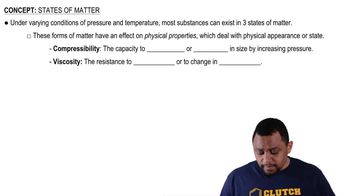
States of Matter

The states of matter refer to the distinct forms that different phases of matter take on. At room temperature, substances can exist as solids, liquids, or gases. Understanding these states is crucial for classifying substances like water (liquid) and iodine (solid) based on their physical properties.
Video consigliato:
Percorso guidato
01:35
States of Matter Concept 1

Mixtures vs. Pure Substances

Mixtures consist of two or more substances that are physically combined, while pure substances have a uniform and definite composition. For example, air is a mixture of gases, whereas sodium bicarbonate is a pure chemical compound. This distinction is essential for categorizing the listed substances.
Video consigliato:
Percorso guidato
02:04
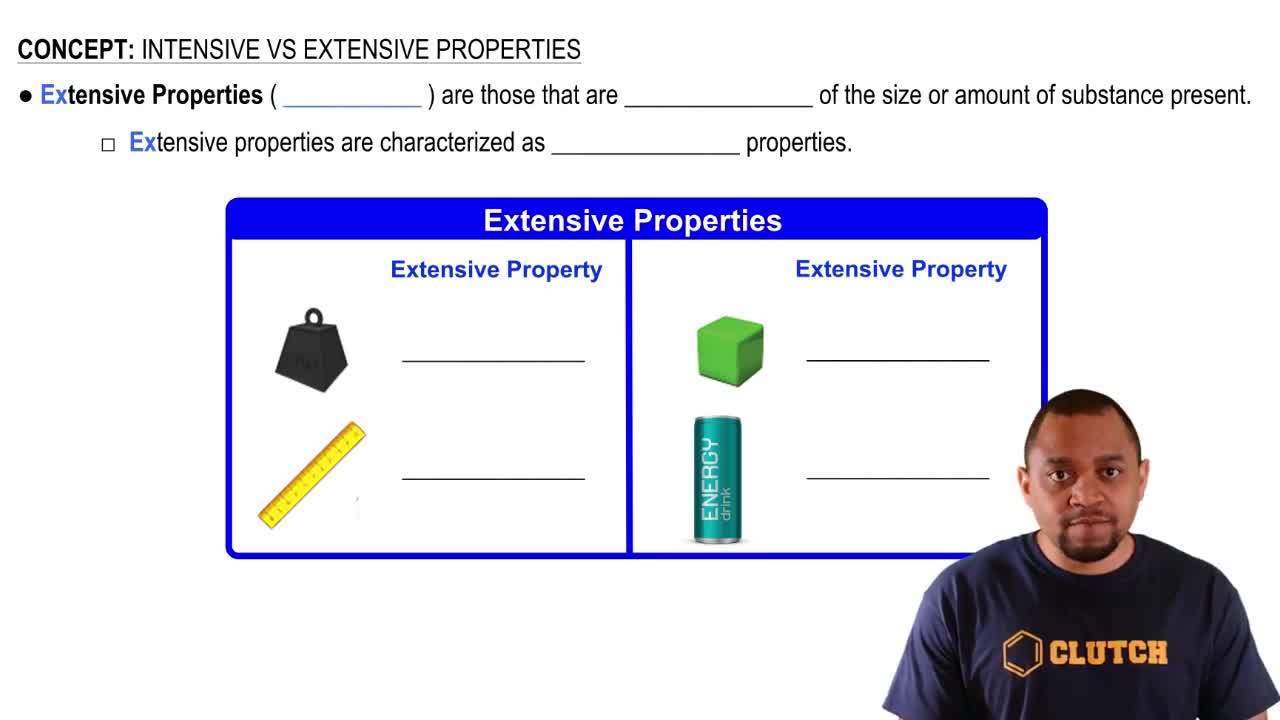
Intensive vs. Extensive Properties

Chemical Elements and Compounds

Chemical elements are pure substances that cannot be broken down into simpler substances, while chemical compounds are formed when two or more elements chemically bond together. For instance, sodium bicarbonate is a compound made from sodium, hydrogen, carbon, and oxygen, whereas silicon is a chemical element. Recognizing these definitions helps in identifying the nature of the substances in the question.
Video consigliato:
Percorso guidato
02:04
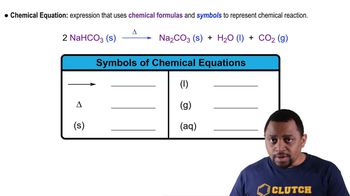
Chemical Reaction: Chemical Change Concept 2