Ch.11 Nuclear Chemistry
McMurry - Fundamentals of General, Organic, and Biological Chemistry 8th Edition
McMurry8th EditionFundamentals of General, Organic, and Biological ChemistryISBN: 9780134015187Non è quello che usi tu?Cambia libro di testo
Capitolo 11, Problema 72

Harmful chemical spills can often be cleaned up by treatment with another chemical. For example, a spill of H2SO4 might be neutralized by addition of NaHCO3. Why is it that the harmful radioactive wastes from nuclear power plants cannot be cleaned up as easily?

Guida verificata passo dopo passo
1
Understand the nature of the problem: Neutralizing H₂SO₄ with NaHCO₃ is a chemical reaction where the acid (H₂SO₄) reacts with the base (NaHCO₃) to form water, carbon dioxide, and a salt (Na₂SO₄). This is a straightforward acid-base neutralization reaction.
Recognize the difference in the nature of radioactive waste: Radioactive waste is not a chemical hazard in the same way as H₂SO₄. Instead, it is a radiological hazard, meaning it emits ionizing radiation that can damage living tissues and DNA. This hazard cannot be neutralized by a simple chemical reaction.
Consider the persistence of radioactive materials: Radioactive isotopes decay over time, but this process is governed by their half-lives, which can range from seconds to thousands of years. This means the waste remains hazardous for a long time, unlike a chemical spill that can be neutralized quickly.
Acknowledge the complexity of radioactive waste: Radioactive waste often contains a mixture of isotopes, each with different properties and decay rates. Managing this waste requires specialized containment and shielding to prevent radiation exposure, rather than a chemical cleanup.
Conclude why radioactive waste cannot be cleaned up easily: Unlike chemical spills, radioactive waste requires long-term management strategies, such as secure storage, containment, and monitoring, rather than a one-time chemical treatment. This is due to its radiological nature and long-lasting hazard.

Risposta video verificata per un problema simile:

Questa soluzione video è stata consigliata dai nostri tutor come utile per risolvere questo problema.
Durata del video:
4m

Concetti chiave

Ecco i concetti essenziali che devi comprendere per rispondere correttamente alla domanda.

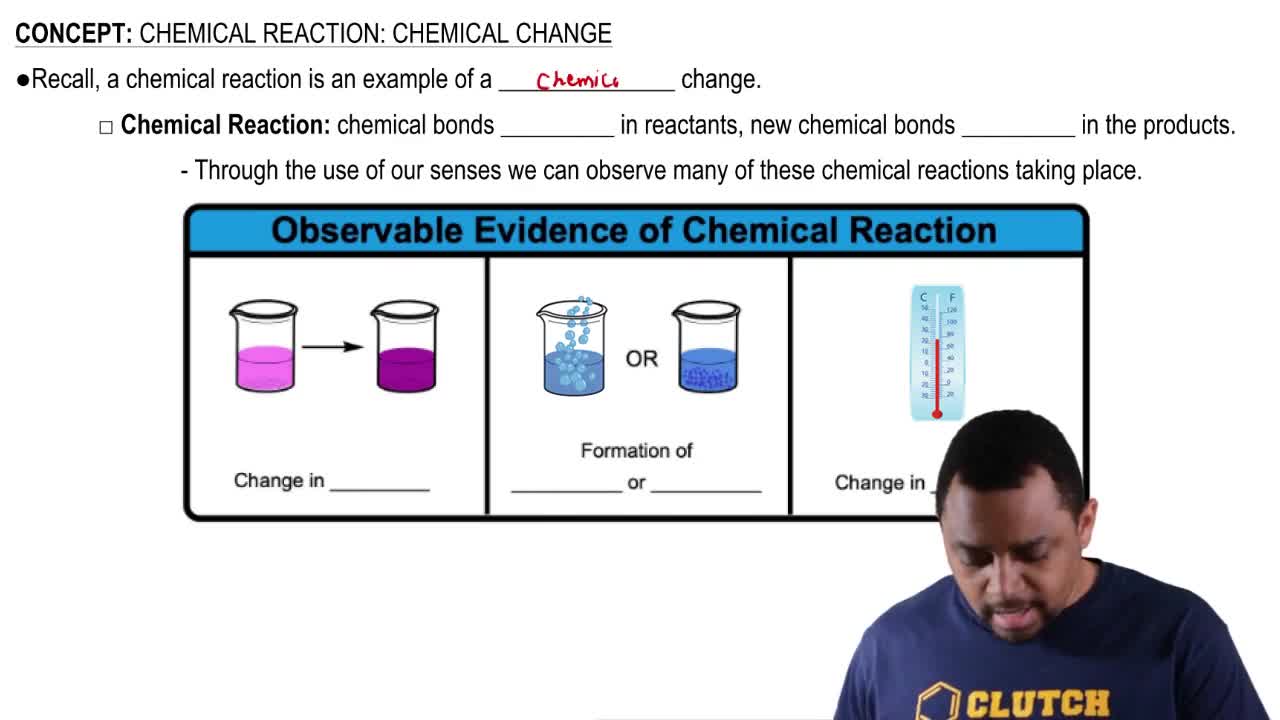
Chemical Neutralization

Chemical neutralization is a process where an acid and a base react to form water and a salt, effectively reducing the harmful effects of the acid. For instance, sulfuric acid (H₂SO₄) can be neutralized by sodium bicarbonate (NaHCO₃), resulting in less harmful products. This method is effective for many chemical spills, but it relies on the specific properties of the chemicals involved.
Video consigliato:
Percorso guidato
00:58
Chemical Reaction: Chemical Change Concept 1

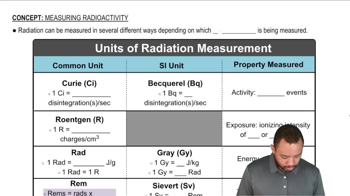
Radioactive Waste

Radioactive waste consists of materials that are radioactive and can remain hazardous for thousands of years. Unlike typical chemical spills, radioactive waste cannot be neutralized through simple chemical reactions. The isotopes present in radioactive waste decay over time, but their harmful effects can persist, necessitating complex management and disposal strategies.
Video consigliato:
Percorso guidato
02:52
Measuring Radioactivity Concept 1

Environmental Impact and Containment

The environmental impact of radioactive waste is significant, as it poses long-term risks to human health and ecosystems. Containment strategies, such as deep geological storage, are essential to prevent the release of radiation into the environment. Unlike chemical spills that can often be cleaned up quickly, radioactive waste requires careful planning and monitoring to ensure safety over extended periods.
Video consigliato:
Percorso guidato
01:42
Significant Figures Calculations Concept 2