
Ch.13 Alkenes, Alkynes, and Aromatic Compounds
McMurry - Fundamentals of General, Organic, and Biological Chemistry 8th Edition
McMurry8th EditionFundamentals of General, Organic, and Biological ChemistryISBN: 9780134015187Non è quello che usi tu?Cambia libro di testo
Capitolo 13, Problema 76

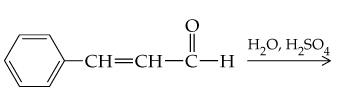
Cinnamaldehyde, the pleasant-smelling substance found in cinnamon oil, has the following structure:

What products would you expect to obtain from reaction of cinnamaldehyde with water and sulfuric acid catalyst?

Guida verificata passo dopo passo
1
Identify the functional groups in cinnamaldehyde. The molecule contains an aldehyde group (-CHO) and a conjugated double bond system (C=C). These groups are reactive under acidic conditions.
Understand the reaction type. The reaction involves water and a sulfuric acid catalyst, which suggests a hydration reaction. In this case, the double bond in the conjugated system is likely to undergo electrophilic addition of water.
Protonate the double bond. Under acidic conditions, the sulfuric acid donates a proton (H⁺) to one of the carbons in the double bond, creating a carbocation intermediate. The stability of the carbocation is enhanced by resonance with the aldehyde group.
Add water to the carbocation. A water molecule acts as a nucleophile and attacks the positively charged carbon in the carbocation, forming a new bond and resulting in a protonated alcohol intermediate.
Deprotonate the intermediate. A base (such as water or bisulfate ion) removes the extra proton from the protonated alcohol, yielding the final product: a hydroxyl group (-OH) added to the carbon that was part of the double bond, forming a beta-hydroxy aldehyde.

Risposta video verificata per un problema simile:

Questa soluzione video è stata consigliata dai nostri tutor come utile per risolvere questo problema.

Concetti chiave

Ecco i concetti essenziali che devi comprendere per rispondere correttamente alla domanda.

Cinnamaldehyde Structure and Reactivity

Cinnamaldehyde is an organic compound characterized by its aldehyde functional group and a phenyl ring. Its structure allows it to undergo various chemical reactions, particularly nucleophilic addition reactions, where water can act as a nucleophile. Understanding its structure is crucial for predicting the products formed during reactions.
Video consigliato:
Percorso guidato
1:01
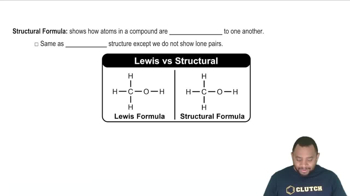
Structural Formula Concept 2

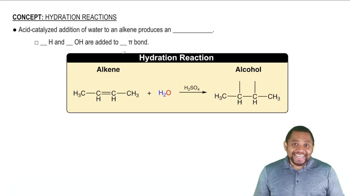
Hydration Reaction

The hydration reaction involves the addition of water to a compound, typically resulting in the formation of an alcohol. In the presence of a catalyst like sulfuric acid, the reaction can proceed more efficiently. This concept is essential for predicting the products when cinnamaldehyde reacts with water.
Video consigliato:
Percorso guidato
1:25
Symmetric Alkene Hydration Concept 1

Role of Sulfuric Acid as a Catalyst

Sulfuric acid serves as a strong acid catalyst that can enhance the rate of chemical reactions, including hydration. It helps to protonate the carbonyl oxygen of cinnamaldehyde, making the carbonyl carbon more electrophilic and facilitating the addition of water. Understanding its catalytic role is vital for anticipating the reaction pathway and products.
Video consigliato: