
Ch.14 Some Compounds with Oxygen, Sulfur, or a Halogen
McMurry - Fundamentals of General, Organic, and Biological Chemistry 8th Edition
McMurry8th EditionFundamentals of General, Organic, and Biological ChemistryISBN: 9780134015187Non è quello che usi tu?Cambia libro di testo
Capitolo 14, Problema 45

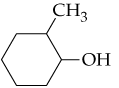
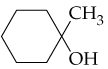
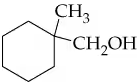
Which of the following alcohols can undergo oxidation? Draw the line structure of the product expected for those that can. Assume an excess of oxidizing agent is present.
a.
b.
c.

Guida verificata passo dopo passo
1
Identify the type of alcohol (primary, secondary, or tertiary) for each structure provided in the problem. Primary alcohols can be oxidized to aldehydes and then further to carboxylic acids. Secondary alcohols can be oxidized to ketones. Tertiary alcohols generally do not undergo oxidation under normal conditions because they lack a hydrogen atom on the carbon bonded to the hydroxyl group.
For each alcohol structure, determine if it is primary, secondary, or tertiary by examining the carbon atom to which the hydroxyl (-OH) group is attached. Count the number of carbon atoms directly bonded to this carbon.
If the alcohol is primary, draw the line structure of the aldehyde formed after the first oxidation step. Then, draw the line structure of the carboxylic acid formed after further oxidation with an excess of oxidizing agent.
If the alcohol is secondary, draw the line structure of the ketone formed after oxidation. Secondary alcohols do not oxidize further under normal conditions.
If the alcohol is tertiary, note that no oxidation reaction occurs, and no product is formed. Explain that this is because tertiary alcohols lack the necessary hydrogen atom on the carbon bonded to the hydroxyl group for oxidation to take place.

Risposta video verificata per un problema simile:

Questa soluzione video è stata consigliata dai nostri tutor come utile per risolvere questo problema.

Concetti chiave

Ecco i concetti essenziali che devi comprendere per rispondere correttamente alla domanda.

Oxidation of Alcohols

Oxidation of alcohols involves the conversion of alcohols into carbonyl compounds, such as aldehydes or ketones, and ultimately to carboxylic acids, depending on the type of alcohol and the oxidizing agent used. Primary alcohols can be oxidized to aldehydes and then to carboxylic acids, while secondary alcohols are typically oxidized to ketones. Tertiary alcohols, however, do not undergo oxidation under normal conditions due to the lack of a hydrogen atom on the carbon bearing the hydroxyl group.
Video consigliato:
Percorso guidato
1:49
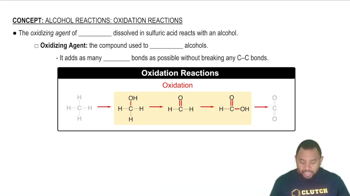
Alcohol Reactions: Oxidation Concept 1

Types of Alcohols

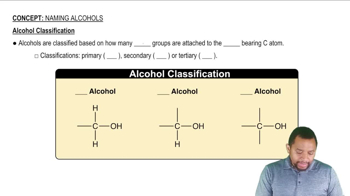
Alcohols are classified into three categories: primary, secondary, and tertiary. Primary alcohols have the hydroxyl group attached to a carbon that is connected to only one other carbon, secondary alcohols are attached to a carbon connected to two other carbons, and tertiary alcohols are attached to a carbon connected to three other carbons. This classification is crucial for predicting the oxidation behavior of the alcohols in the question.
Video consigliato:
Percorso guidato
1:10
Alcohol Classification Concept 2

Oxidizing Agents

Oxidizing agents are substances that facilitate the oxidation of other compounds by accepting electrons. Common oxidizing agents for alcohols include potassium dichromate (K2Cr2O7), chromium trioxide (CrO3), and sodium hypochlorite (NaOCl). The presence of an excess of oxidizing agent, as stated in the question, indicates that complete oxidation of the alcohols may occur, leading to the formation of the corresponding carbonyl compounds or acids.
Video consigliato:
Percorso guidato
1:49
Alcohol Reactions: Oxidation Concept 1