Ch.21 The Generation of Biochemical Energy
McMurry - Fundamentals of General, Organic, and Biological Chemistry 8th Edition
McMurry8th EditionFundamentals of General, Organic, and Biological ChemistryISBN: 9780134015187Non è quello che usi tu?Cambia libro di testo
Capitolo 21, Problema 76

Why must the breakdown of molecules for energy in the body occur in several steps, rather than in one step?

Guida verificata passo dopo passo
1
The breakdown of molecules for energy in the body occurs in several steps to ensure that the energy released is controlled and manageable. If all the energy were released in one step, it could result in a sudden release of heat, which would be inefficient and potentially harmful to the body.
In a multi-step process, the energy is released gradually, allowing the body to capture and store it in usable forms, such as ATP (adenosine triphosphate). This ensures that the energy can be utilized efficiently for cellular processes.
Each step in the breakdown process is catalyzed by specific enzymes, which help regulate the reaction rates and ensure that the reactions occur under physiological conditions.
The multi-step process also allows for intermediate molecules to be formed, which can be used in other metabolic pathways. This increases the versatility and efficiency of the body's metabolism.
Finally, breaking down molecules in several steps allows the body to maintain homeostasis by preventing large fluctuations in energy levels and ensuring that the energy needs of cells are met consistently over time.

Risposta video verificata per un problema simile:

Questa soluzione video è stata consigliata dai nostri tutor come utile per risolvere questo problema.
Durata del video:
3m

Concetti chiave

Ecco i concetti essenziali che devi comprendere per rispondere correttamente alla domanda.

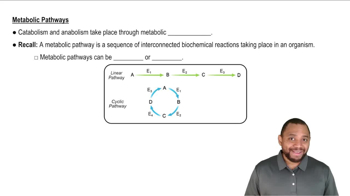
Metabolic Pathways

Metabolic pathways are sequences of chemical reactions occurring within a cell, where the product of one reaction serves as the substrate for the next. These pathways allow for the gradual breakdown of molecules, enabling the cell to efficiently extract energy while controlling the release of energy in manageable amounts.
Video consigliato:
Percorso guidato
0:52
Metabolic Pathways Concept 2

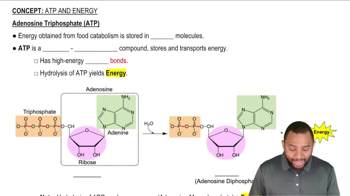
Energy Transfer and ATP

Adenosine triphosphate (ATP) is the primary energy carrier in cells. The stepwise breakdown of molecules, such as glucose, allows for the controlled release of energy, which is captured in the form of ATP. This prevents energy loss and ensures that energy is available for cellular processes when needed.
Video consigliato:
Percorso guidato
2:20
Adenosine Triphosphate (ATP) Concept 2

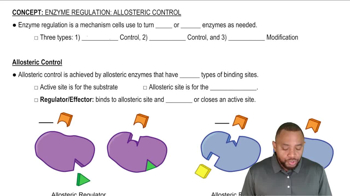
Regulation and Control

The breakdown of molecules in multiple steps allows for greater regulation and control of metabolic processes. Enzymes involved in each step can be regulated, ensuring that the cell can respond to changes in energy demand and substrate availability, thus maintaining homeostasis and preventing metabolic imbalances.
Video consigliato:
Percorso guidato
2:57
Allosteric Control Concept 1