Ch.21 The Generation of Biochemical Energy
McMurry - Fundamentals of General, Organic, and Biological Chemistry 8th Edition
McMurry8th EditionFundamentals of General, Organic, and Biological ChemistryISBN: 9780134015187Non è quello che usi tu?Cambia libro di testo
Capitolo 21, Problema 82

If you use a flame to burn a pile of glucose completely to give carbon dioxide and water, the overall reaction is identical to the metabolic oxidation of glucose. Explain the differences in the fate of the energy released in each case.

Guida verificata passo dopo passo
1
Understand the chemical reaction: The combustion of glucose (C₆H₁₂O₆) in the presence of oxygen (O₂) produces carbon dioxide (CO₂) and water (H₂O). The balanced chemical equation is: C61266+6O2→6CO2+6H2O. This reaction releases energy in the form of heat and light during combustion.
Compare the energy release in combustion: When glucose is burned in a flame, the energy is released rapidly as heat and light. This is an uncontrolled process where the energy is dissipated into the surroundings, making it unavailable for any biological work.
Compare the energy release in metabolism: In the metabolic oxidation of glucose, the energy is released gradually through a series of enzymatic reactions in the body. This controlled process allows the energy to be captured and stored in the form of adenosine triphosphate (ATP), which is used to power cellular activities.
Explain the role of enzymes in metabolism: Enzymes play a critical role in breaking down glucose step by step in metabolic pathways such as glycolysis, the citric acid cycle, and oxidative phosphorylation. This ensures that the energy is harnessed efficiently rather than being lost as heat.
Summarize the key difference: The primary difference lies in the fate of the energy. In combustion, energy is lost as heat and light, while in metabolism, energy is conserved and stored in ATP, making it available for biological functions.

Risposta video verificata per un problema simile:

Questa soluzione video è stata consigliata dai nostri tutor come utile per risolvere questo problema.
Durata del video:
2m

Concetti chiave

Ecco i concetti essenziali che devi comprendere per rispondere correttamente alla domanda.

Combustion of Glucose

The combustion of glucose is a chemical reaction where glucose reacts with oxygen to produce carbon dioxide and water, releasing energy primarily in the form of heat and light. This process is exothermic and occurs rapidly, resulting in a significant release of energy that is not harnessed for biological work.
Video consigliato:
Percorso guidato
2:07
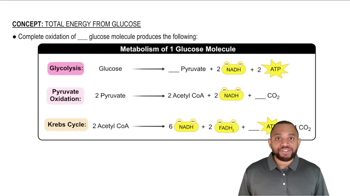
Total Energy From Glucose Concept 1

Metabolic Oxidation

Metabolic oxidation of glucose refers to the biochemical process by which cells break down glucose in a series of controlled reactions to produce energy in the form of ATP (adenosine triphosphate). This process occurs in a stepwise manner, allowing for the efficient capture and utilization of energy, which is essential for cellular functions.
Video consigliato:
Percorso guidato
1:47
Glycerol Metabolism Example 1

Energy Transfer and Utilization

The fate of energy released during combustion is primarily as heat, which dissipates into the environment, while in metabolic oxidation, energy is stored in ATP molecules. This stored energy can then be used for various cellular processes, such as muscle contraction, biosynthesis, and active transport, highlighting the importance of energy transfer mechanisms in living organisms.
Video consigliato:
Percorso guidato
01:26
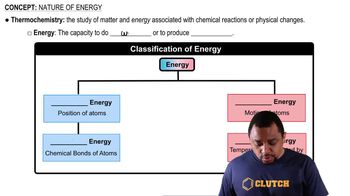
Nature of Energy