Ch.22 Carbohydrate Metabolism
McMurry - Fundamentals of General, Organic, and Biological Chemistry 8th Edition
McMurry8th EditionFundamentals of General, Organic, and Biological ChemistryISBN: 9780134015187Non è quello che usi tu?Cambia libro di testo
Capitolo 22, Problema 66

How many steps in gluconeogenesis are not the exact reversal of the steps in glycolysis? What kind of conversion of substrate to product does each involve? What is the common theme in each of these reactions?

Guida verificata passo dopo passo
1
Identify the steps in glycolysis that are irreversible. These steps are catalyzed by enzymes that facilitate reactions with large negative free energy changes, making them unidirectional under physiological conditions.
Determine which steps in gluconeogenesis bypass these irreversible steps in glycolysis. These bypass steps involve different enzymes and mechanisms to reverse the process.
For each bypass step, analyze the type of substrate-to-product conversion involved. For example, one step involves the conversion of pyruvate to phosphoenolpyruvate via oxaloacetate, which requires two separate reactions catalyzed by pyruvate carboxylase and phosphoenolpyruvate carboxykinase.
Examine the common theme in these bypass reactions. Typically, they involve the input of energy (in the form of ATP or GTP) or the use of high-energy intermediates to drive the reactions forward, overcoming the thermodynamic barrier of the irreversible glycolysis steps.
Summarize the findings: The bypass steps in gluconeogenesis are designed to circumvent the irreversible steps of glycolysis by using alternative pathways and enzymes, with a common theme of energy investment to achieve the reversal of these steps.

Risposta video verificata per un problema simile:

Questa soluzione video è stata consigliata dai nostri tutor come utile per risolvere questo problema.
Durata del video:
7m

Concetti chiave

Ecco i concetti essenziali che devi comprendere per rispondere correttamente alla domanda.

Gluconeogenesis

Gluconeogenesis is the metabolic pathway that results in the generation of glucose from non-carbohydrate substrates. It primarily occurs in the liver and, to a lesser extent, in the kidneys. This process is crucial during fasting or intense exercise when glucose levels are low, allowing the body to maintain energy supply. Understanding this pathway is essential for analyzing its differences from glycolysis.
Video consigliato:
Percorso guidato
1:23
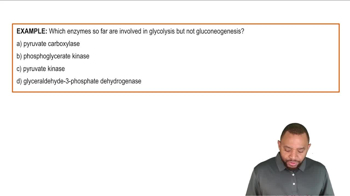
Gluconeogenesis Example 2

Key Regulatory Steps

In gluconeogenesis, three key steps are not simply the reverse of glycolysis: the conversion of pyruvate to phosphoenolpyruvate, fructose-1,6-bisphosphate to fructose-6-phosphate, and glucose-6-phosphate to glucose. These steps involve unique enzymes and different substrates, highlighting the need for energy input and regulation. Recognizing these steps is vital for understanding the differences between the two pathways.
Video consigliato:
Percorso guidato
5:08
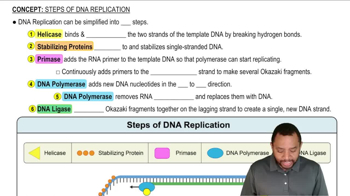
Steps of DNA Replication Concept 1

Energetics and Regulation

The common theme in the non-reversible steps of gluconeogenesis is the requirement for energy input and specific regulatory mechanisms. These reactions often involve the hydrolysis of ATP or GTP, emphasizing the energetic cost of synthesizing glucose. Additionally, these steps are tightly regulated by hormonal signals and energy status, ensuring that gluconeogenesis occurs only when necessary, such as during fasting.
Video consigliato:
Percorso guidato
2:57
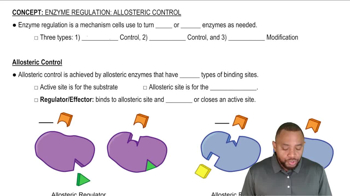
Allosteric Control Concept 1