Ch.24 Lipid Metabolism
McMurry - Fundamentals of General, Organic, and Biological Chemistry 8th Edition
McMurry8th EditionFundamentals of General, Organic, and Biological ChemistryISBN: 9780134015187Non è quello che usi tu?Cambia libro di testo
Capitolo 24, Problema 72

A low-fat diet of pasta, bread, beer, and soda can easily lead to an increase in weight. The increase is stored triacylglycerols in adipocytes. Explain the weight increase and why the excess carbohydrate is stored as fat.

Guida verificata passo dopo passo
1
Understand that carbohydrates consumed in excess of the body's immediate energy needs are converted into fat for long-term energy storage. This is because the body has a limited capacity to store carbohydrates as glycogen, primarily in the liver and muscles.
When glycogen stores are full, the excess carbohydrates are metabolized into acetyl-CoA through glycolysis and the citric acid cycle. Acetyl-CoA is a key intermediate in metabolic pathways.
Acetyl-CoA is then used in the process of lipogenesis, where it is converted into fatty acids. These fatty acids are combined with glycerol to form triacylglycerols (triglycerides), which are the primary form of fat storage in the body.
Triacylglycerols are stored in adipocytes (fat cells) because they are a highly efficient form of energy storage, providing more energy per gram compared to carbohydrates or proteins.
The weight increase occurs because the storage of triacylglycerols in adipocytes leads to an increase in fat mass. This is the body's way of storing excess energy for future use, but it can lead to weight gain if energy intake consistently exceeds energy expenditure.

Risposta video verificata per un problema simile:

Questa soluzione video è stata consigliata dai nostri tutor come utile per risolvere questo problema.
Durata del video:
3m

Concetti chiave

Ecco i concetti essenziali che devi comprendere per rispondere correttamente alla domanda.

Caloric Surplus

A caloric surplus occurs when the number of calories consumed exceeds the number of calories burned by the body. This excess energy is stored in various forms, primarily as fat. In the context of a low-fat diet high in carbohydrates, such as pasta and bread, individuals may consume more calories than they expend, leading to weight gain.
Video consigliato:
Percorso guidato
1:33
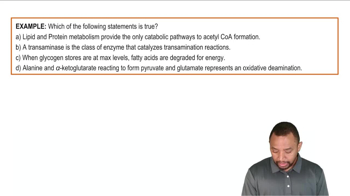
Review of Metabolism Example 1

Carbohydrate Metabolism

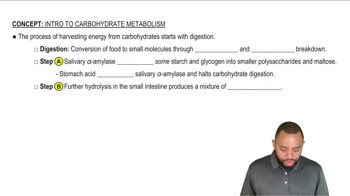
Carbohydrates are broken down into glucose, which is used for immediate energy or stored as glycogen in the liver and muscles. However, when glycogen stores are full and excess glucose is present, the body converts this surplus into triacylglycerols (fat) through a process called de novo lipogenesis. This is why excess carbohydrates can lead to fat storage.
Video consigliato:
Percorso guidato
1:53
Intro To Carbohydrate Metabolism Concept 1

Adipocytes and Triacylglycerols

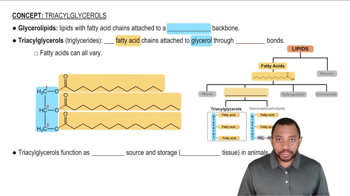
Adipocytes, or fat cells, are specialized cells that store energy in the form of triacylglycerols. When the body has an excess of energy, particularly from carbohydrates, these triacylglycerols accumulate in adipocytes, leading to an increase in body fat and overall weight. This storage mechanism is crucial for energy balance and long-term energy reserves.
Video consigliato:
Percorso guidato
1:52
Triacylglycerols Concept 1