Ch.17 Nucleic Acids and Protein Synthesis
Timberlake - Chemistry: An Introduction to General, Organic, and Biological Chemistry 13th Edition
Timberlake13th EditionChemistry: An Introduction to General, Organic, and Biological ChemistryISBN: 9780134421353Non è quello che usi tu?Cambia libro di testo
Capitolo 17, Problema 61

What is the effect of a deletion mutation on the amino acid sequence of a polypeptide?

Guida verificata passo dopo passo
1
Understand the concept of a deletion mutation: A deletion mutation occurs when one or more nucleotides are removed from the DNA sequence. This can alter the reading frame of the genetic code if the number of nucleotides deleted is not a multiple of three, leading to a frameshift mutation.
Recall the relationship between DNA, mRNA, and amino acids: DNA is transcribed into mRNA, which is then translated into a sequence of amino acids. Each group of three nucleotides (codon) in the mRNA corresponds to a specific amino acid.
Determine the impact of a frameshift mutation: If the deletion causes a frameshift, the reading frame of the codons will shift, potentially altering every amino acid encoded downstream of the mutation. This can result in a completely different polypeptide sequence or a premature stop codon.
Consider the case of a deletion in multiples of three: If the number of nucleotides deleted is a multiple of three, the reading frame is preserved. However, the polypeptide will be missing one or more amino acids corresponding to the deleted codons.
Conclude the overall effect: A deletion mutation can significantly alter the structure and function of the resulting polypeptide, depending on whether it causes a frameshift or simply removes specific amino acids.

Risposta video verificata per un problema simile:

Questa soluzione video è stata consigliata dai nostri tutor come utile per risolvere questo problema.
Durata del video:
1m

Concetti chiave

Ecco i concetti essenziali che devi comprendere per rispondere correttamente alla domanda.

Deletion Mutation

A deletion mutation occurs when one or more nucleotides are removed from the DNA sequence. This alteration can disrupt the reading frame of the genetic code, leading to significant changes in the resulting polypeptide. Depending on the location and extent of the deletion, it can result in a truncated protein or a completely different amino acid sequence.

Amino Acid Sequence

The amino acid sequence of a polypeptide is determined by the sequence of nucleotides in the corresponding gene. Each set of three nucleotides, known as a codon, codes for a specific amino acid. Changes in the nucleotide sequence, such as those caused by deletion mutations, can lead to alterations in the amino acid sequence, potentially affecting the protein's structure and function.
Video consigliato:
Percorso guidato
3:03
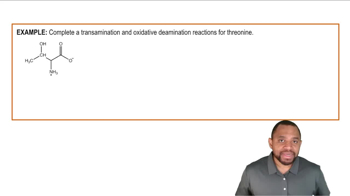
Amino Acid Catabolism: Amino Group Example 2

Reading Frame

The reading frame refers to the way nucleotides in a DNA or RNA sequence are grouped into codons during translation. A deletion mutation can shift the reading frame, causing all subsequent codons to be read incorrectly. This shift can lead to the incorporation of incorrect amino acids, premature stop codons, or a completely nonfunctional protein, highlighting the critical nature of maintaining the correct reading frame.
Video consigliato:
Percorso guidato
1:30
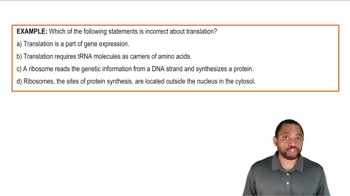
Introduction to Translation Example 1