Ch.6 Ionic and Molecular Compounds
Timberlake - Chemistry: An Introduction to General, Organic, and Biological Chemistry 13th Edition
Timberlake13th EditionChemistry: An Introduction to General, Organic, and Biological ChemistryISBN: 9780134421353Non è quello che usi tu?Cambia libro di testo
Capitolo 6, Problema 11d

Write the names for each of the following ions:
d. P3-

Guida verificata passo dopo passo
1
Step 1: Recognize that the ion is a negatively charged ion (anion) because of the superscript '³⁻', which indicates a charge of -3.
Step 2: Identify the element symbol 'P' as phosphorus from the periodic table.
Step 3: Recall that when naming anions, the ending of the element's name is replaced with '-ide'. For phosphorus, the name changes to 'phosphide'.
Step 4: Combine the modified name with the charge information to confirm the name of the ion. The charge is not explicitly stated in the name of the ion, so the name is simply 'phosphide'.
Step 5: Conclude that the name of the ion P³⁻ is 'phosphide'.

Risposta video verificata per un problema simile:

Questa soluzione video è stata consigliata dai nostri tutor come utile per risolvere questo problema.
Durata del video:
50s

Concetti chiave

Ecco i concetti essenziali che devi comprendere per rispondere correttamente alla domanda.

Ionic Charge

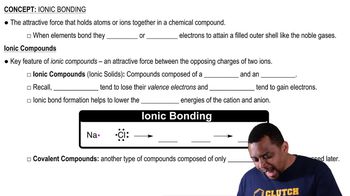
Ionic charge refers to the electrical charge that an ion carries, which is determined by the loss or gain of electrons. In the case of P³⁻, the negative charge indicates that the phosphorus atom has gained three electrons, resulting in a total of five electrons in its outer shell, which is crucial for understanding its reactivity and bonding behavior.
Video consigliato:
Percorso guidato
02:33
Ionic Bonding Concept 1

Phosphide Ion

The P³⁻ ion is known as the phosphide ion. It is formed when phosphorus gains three electrons, leading to a stable electron configuration. Phosphide ions are typically found in ionic compounds, where they bond with metals, and they play a significant role in various chemical reactions and materials.
Video consigliato:
Percorso guidato
01:00
Polyatomic Ions Example 1

Naming Ions

Naming ions involves using specific conventions based on their charge and the element they represent. For anions like P³⁻, the name is derived from the element's name with the suffix '-ide' added, resulting in 'phosphide.' This systematic approach helps in identifying and categorizing ions in chemical formulas and reactions.
Video consigliato:
Percorso guidato
03:23
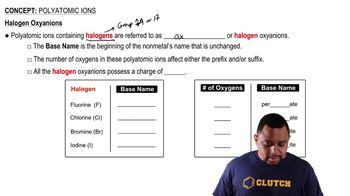
Polyatomic Ions