
Domanda del libro di testo
Use the words inspiration and expiration to describe the part of the breathing cycle that occurs as a result of each of the following:
a. The diaphragm contracts.
1951
views

 Guida verificata passo dopo passo
 01:54
01:54
 01:56
01:56 01:15
01:15Use the words inspiration and expiration to describe the part of the breathing cycle that occurs as a result of each of the following:
a. The diaphragm contracts.
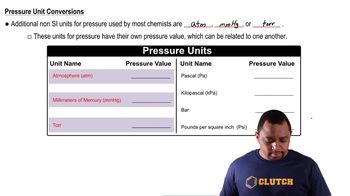
A tank contains oxygen (O2) at a pressure of 2.00 atm. What is the pressure in the tank in terms of the following units?
d. kPa
A tank contains oxygen (O2) at a pressure of 2.00 atm. What is the pressure in the tank in terms of the following units?
b. lb/in.2
On a climb up Mount Whitney, the atmospheric pressure drops to 467 mmHg. What is the pressure in terms of the following units?
b. torr
Use the words inspiration and expiration to describe the part of the breathing cycle that occurs as a result of each of the following:
c. The pressure within the lungs is higher than that of the atmosphere.
A gas sample has a volume of 0.256 L with an unknown temperature. The same gas has a volume of 0.198 L when the temperature is 32 °C, with no change in the pressure or amount of gas. What was the initial temperature, in degrees Celsius, of the gas?