Ch.13 Carbohydrates
Timberlake - Chemistry: An Introduction to General, Organic, and Biological Chemistry 14th Edition
Timberlake14th EditionChemistry: An Introduction to General, Organic, and Biological ChemistryISBN: 9781292472249Non è quello che usi tu?Cambia libro di testo
Capitolo 13, Problema 41a

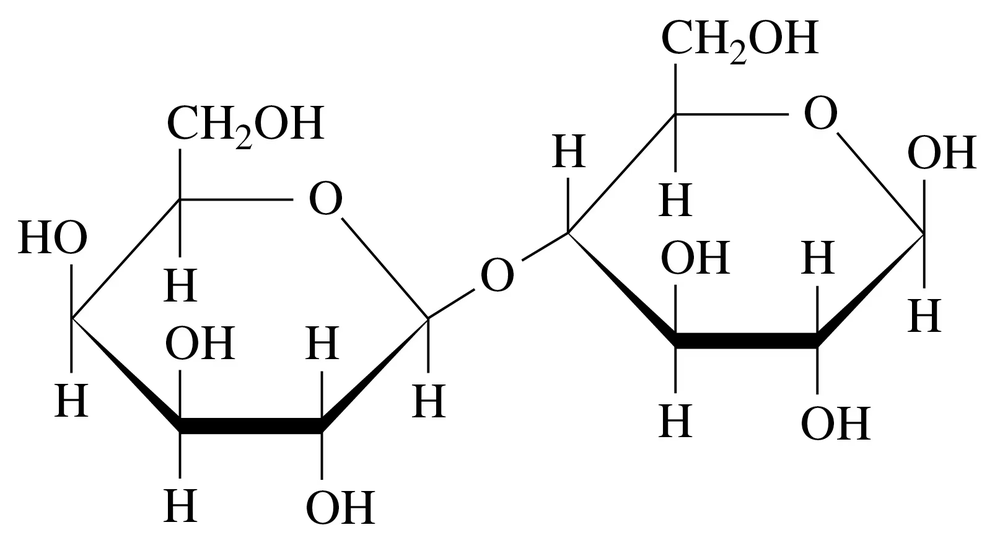
For each of the following, give the monosaccharide units produced by hydrolysis, the type of glycosidic bond, and the name of the disaccharide, including α or β:
a. Chemical structure of a disaccharide showing monosaccharide units and glycosidic bond details.

Guida verificata passo dopo passo
1
Identify the disaccharide structure in the image provided. Look for the two monosaccharide units and the type of glycosidic bond connecting them. Common disaccharides include maltose, lactose, and sucrose.
Determine the monosaccharide units by analyzing the structure. For example, glucose, galactose, and fructose are common monosaccharides. Pay attention to the orientation of the hydroxyl groups to identify α or β forms.
Examine the glycosidic bond. This bond connects the anomeric carbon of one monosaccharide to a hydroxyl group of the other. Identify whether the bond is α (downward) or β (upward) based on the orientation of the anomeric carbon's substituent.
Name the disaccharide based on the monosaccharide units and the type of glycosidic bond. For example, if the disaccharide consists of two glucose units connected by an α-1,4-glycosidic bond, it is maltose.
Summarize the findings: list the monosaccharide units produced by hydrolysis, specify the type of glycosidic bond (e.g., α-1,4 or β-1,4), and provide the name of the disaccharide, including whether it is α or β.

Risposta video verificata per un problema simile:

Questa soluzione video è stata consigliata dai nostri tutor come utile per risolvere questo problema.
Durata del video:
7m

Concetti chiave

Ecco i concetti essenziali che devi comprendere per rispondere correttamente alla domanda.

Monosaccharides

Monosaccharides are the simplest form of carbohydrates, consisting of single sugar units such as glucose, fructose, and galactose. They serve as the building blocks for more complex carbohydrates, including disaccharides and polysaccharides. Understanding the specific monosaccharides produced during hydrolysis is crucial for identifying the structure and function of the original disaccharide.
Video consigliato:
Percorso guidato
0:55
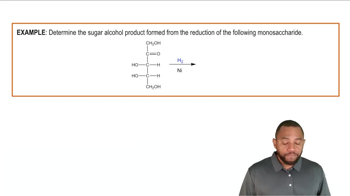
Reduction of Monosaccharides Example 1

Glycosidic Bonds

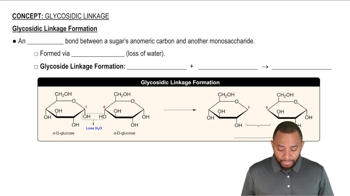
Glycosidic bonds are covalent linkages formed between monosaccharides through a dehydration reaction, resulting in the formation of disaccharides or polysaccharides. The type of glycosidic bond, whether α (alpha) or β (beta), significantly influences the properties and digestibility of the carbohydrate. Recognizing the type of bond is essential for understanding how the disaccharide can be broken down into its monosaccharide components.
Video consigliato:
Percorso guidato
1:44
Glycosidic Linkage Formation Concept 1

Disaccharides

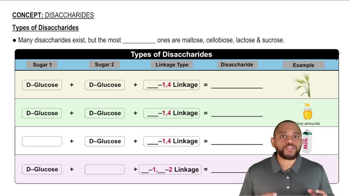
Disaccharides are carbohydrates composed of two monosaccharide units linked by a glycosidic bond. Common examples include sucrose (glucose + fructose) and lactose (glucose + galactose). Identifying the specific disaccharide and its constituent monosaccharides is vital for comprehending its nutritional value and metabolic pathways.
Video consigliato:
Percorso guidato
3:39
Types of Disaccharides Concept 1