Ch.13 Carbohydrates
Timberlake - Chemistry: An Introduction to General, Organic, and Biological Chemistry 14th Edition
Timberlake14th EditionChemistry: An Introduction to General, Organic, and Biological ChemistryISBN: 9781292472249Non è quello che usi tu?Cambia libro di testo
Capitolo 13, Problema 2

What is the relationship between photosynthesis and respiration?

Guida verificata passo dopo passo
1
Understand that photosynthesis and respiration are complementary biochemical processes that occur in living organisms. Photosynthesis occurs in plants, algae, and some bacteria, while respiration occurs in almost all living organisms.
Recognize that photosynthesis converts light energy into chemical energy stored in glucose molecules. The overall equation for photosynthesis is: 6CO2 + 6H2O + light → C6H12O6 + 6O2.
Note that cellular respiration is the process by which organisms break down glucose molecules to release energy in the form of ATP. The overall equation for respiration is the reverse of photosynthesis: C6H12O6 + 6O2 → 6CO2 + 6H2O + energy.
Identify the relationship: Photosynthesis produces glucose and oxygen, which are the reactants for respiration. Conversely, respiration produces carbon dioxide and water, which are the reactants for photosynthesis. This creates a cycle that supports life on Earth.
Conclude that photosynthesis and respiration are interconnected processes that maintain the balance of oxygen and carbon dioxide in the atmosphere, and they are essential for the flow of energy through ecosystems.

Risposta video verificata per un problema simile:

Questa soluzione video è stata consigliata dai nostri tutor come utile per risolvere questo problema.
Durata del video:
3m

Concetti chiave

Ecco i concetti essenziali che devi comprendere per rispondere correttamente alla domanda.

Photosynthesis

Photosynthesis is the process by which green plants, algae, and some bacteria convert light energy into chemical energy, specifically glucose, using carbon dioxide and water. This process occurs primarily in the chloroplasts of plant cells and involves the pigment chlorophyll. The overall equation for photosynthesis can be summarized as: 6CO2 + 6H2O + light energy → C6H12O6 + 6O2.

Cellular Respiration

Cellular respiration is the metabolic process by which organisms convert glucose and oxygen into energy, carbon dioxide, and water. This process occurs in the mitochondria of cells and can be aerobic (requiring oxygen) or anaerobic (not requiring oxygen). The general equation for aerobic respiration is: C6H12O6 + 6O2 → 6CO2 + 6H2O + energy (ATP).
Video consigliato:
Percorso guidato
1:47
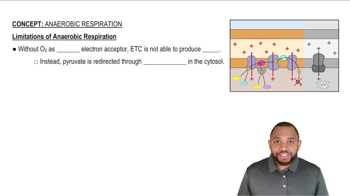
Anaerobic Respiration Concept 1

The Carbon Cycle

The carbon cycle is the natural process through which carbon is exchanged among the atmosphere, land, water, and living organisms. Photosynthesis and respiration are key components of this cycle, as plants absorb carbon dioxide during photosynthesis and release oxygen, while animals and other organisms take in oxygen and release carbon dioxide during respiration. This cyclical relationship helps maintain the balance of carbon in the ecosystem.
Video consigliato:
Percorso guidato
2:43
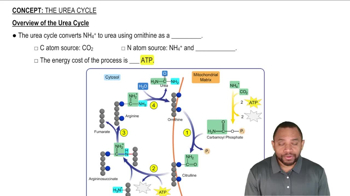
The Urea Cycle Concept 1