Ch.15 Lipids
Timberlake - Chemistry: An Introduction to General, Organic, and Biological Chemistry 14th Edition
Timberlake14th EditionChemistry: An Introduction to General, Organic, and Biological ChemistryISBN: 9781292472249Non è quello che usi tu?Cambia libro di testo
Capitolo 15, Problema 53

Why is LDL called “bad” cholesterol?

Guida verificata passo dopo passo
1
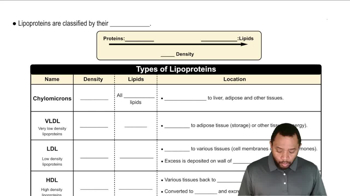
Understand that LDL stands for Low-Density Lipoprotein, which is a type of lipoprotein responsible for transporting cholesterol in the bloodstream.
Recognize that LDL is often referred to as 'bad' cholesterol because it can deposit cholesterol on the walls of arteries, leading to the formation of plaques.
Learn that the buildup of plaques in the arteries, a condition called atherosclerosis, can narrow or block blood flow, increasing the risk of heart disease and stroke.
Contrast LDL with HDL (High-Density Lipoprotein), which is considered 'good' cholesterol because it helps remove cholesterol from the bloodstream and transport it to the liver for excretion.
Conclude that maintaining a healthy balance between LDL and HDL levels is important for cardiovascular health, and lifestyle choices such as diet and exercise can influence these levels.

Risposta video verificata per un problema simile:

Questa soluzione video è stata consigliata dai nostri tutor come utile per risolvere questo problema.
Durata del video:
3m

Concetti chiave

Ecco i concetti essenziali che devi comprendere per rispondere correttamente alla domanda.

Low-Density Lipoprotein (LDL)

Low-Density Lipoprotein (LDL) is a type of lipoprotein that carries cholesterol in the bloodstream. It is often referred to as 'bad' cholesterol because high levels of LDL can lead to the buildup of plaque in arteries, increasing the risk of cardiovascular diseases such as heart attacks and strokes.
Video consigliato:
Percorso guidato
3:52
Lipoproteins for Transport Concept 2

Cholesterol Function

Cholesterol is a waxy substance that is essential for building cell membranes and producing hormones. However, the body needs a balance of different types of cholesterol; while some cholesterol is necessary for health, excess LDL can disrupt this balance and contribute to health problems.
Video consigliato:
Percorso guidato
02:16
Logarithmic Functions

Atherosclerosis

Atherosclerosis is a condition characterized by the hardening and narrowing of arteries due to plaque buildup, which can be exacerbated by high levels of LDL cholesterol. This process can restrict blood flow and lead to serious cardiovascular issues, making the management of LDL levels crucial for heart health.