 Indietro
Adaptive Immunity: Mechanisms, Cells, and Clinical Applications
Guida di studio - Note intelligenti
 Appunti personalizzati basati sui tuoi materiali, ampliati con definizioni chiave, esempi e contesto.
Adaptive Immunity
Overview of Adaptive Immunity
Adaptive immunity is the body's highly specialized ability to recognize and defend itself against specific invaders and their products. It is characterized by five key attributes:
Specificity: Tailored reactions against specific pathogens.
Inducibility: Activation only in response to specific pathogens.
Clonality: Proliferation of identical cells (clones) after activation.
Unresponsiveness to self: Does not act against the body’s own cells (self-tolerance).
Memory: Adapts to respond faster and more effectively upon subsequent encounters with the same pathogen.
These aspects involve the activities of lymphocytes, primarily B cells and T cells.
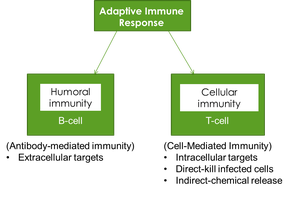
Lymphocytes: B Cells and T Cells
B lymphocytes (B cells): Arise and mature in the red bone marrow. Responsible for antibody-mediated (humoral) immunity, targeting extracellular pathogens.
T lymphocytes (T cells): Arise in the red bone marrow but mature in the thymus. Responsible for cell-mediated immunity, targeting intracellular pathogens and abnormal cells.
Elements of Adaptive Immunity: The Lymphatic System
Tissues and Organs of the Lymphatic System
The lymphatic system is a network of vessels, cells, tissues, and organs that screen the body for foreign antigens and facilitate immune responses. It acts as a surveillance system, transporting lymph (a fluid similar to plasma) and concentrating lymphocytes in strategic locations.
Lymphatic vessels: One-way system returning lymph to the circulatory system.
Lymph nodes: Sites where lymph is filtered and antigens interact with lymphocytes.
Spleen: Filters blood, removing pathogens and old cells.
Tonsils and MALT: Trap foreign particles and microbes at mucosal surfaces.
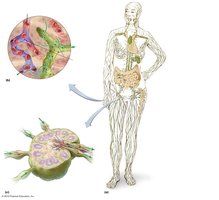
Lymphoid Organs
Primary lymphoid organs: Red bone marrow and thymus (sites of lymphocyte maturation).
Secondary lymphoid organs: Lymph nodes, spleen, tonsils, and MALT (sites where mature lymphocytes encounter antigens).
Elements of Adaptive Immunity: Antigens
Definition and Types of Antigens
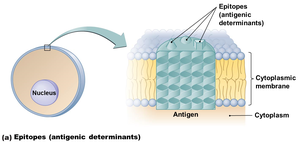
Antigens are foreign substances that trigger adaptive immune responses. They are recognized by specific regions called epitopes (antigenic determinants).
Exogenous antigens: Toxins, microbial cell wall components, and secretions found outside cells.
Endogenous antigens: Produced within infected cells (e.g., viral proteins); presented on the cell surface for immune recognition.
Autoantigens: Derived from normal cellular processes; usually ignored by the immune system to prevent autoimmunity.
Elements of Adaptive Immunity: T Lymphocytes (T Cells)
Functions and Types of T Cells
T cells are central to cell-mediated immune responses. They arise from the bone marrow, mature in the thymus, and circulate in the blood and lymphatic system. Each T cell expresses a unique T cell receptor (TCR) that recognizes specific antigens presented by major histocompatibility complex (MHC) proteins.
MHC class I: Present on all nucleated cells (except RBCs); present endogenous antigens.
MHC class II: Present only on antigen-presenting cells (APCs) such as B cells, macrophages, and dendritic cells; present exogenous antigens.
Types of T Cells
Cytotoxic T lymphocytes (Tc, CD8+): Kill infected or abnormal cells directly.
Helper T lymphocytes (Th, CD4+): Regulate immune responses by secreting cytokines and activating B cells and Tc cells.
Regulatory T lymphocytes (Tr, CD4+, CD25+): Suppress immune responses to prevent autoimmunity.
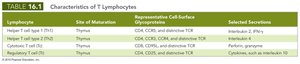
Lymphocyte | Site of Maturation | Representative Cell Surface Glycoproteins | Selected Secretions |
|---|---|---|---|
Helper T cell type 1 (Th1) | Thymus | CD4, CD26, and distinctive TCR | Interleukin 2, IFN-γ |
Helper T cell type 2 (Th2) | Thymus | CD4, CD26, and distinctive TCR | Interleukin 4 |
Cytotoxic T cell (Tc) | Thymus | CD8, CD26, and distinctive TCR | Perforin, granzyme |
Regulatory T cell (Tr) | Thymus | CD4, CD25, and distinctive TCR | Cytokines such as interleukin 10 |
Clonal Deletion of T Cells
To prevent autoimmunity, T cells that react to self-antigens undergo clonal deletion (apoptosis) during development. Only non-self-reactive T cells survive and enter circulation.
Elements of Adaptive Immunity: B Lymphocytes (B Cells) and Antibodies
B Cell Structure and Function
B cells are primarily found in the spleen, lymph nodes, and MALT. Their main function is the production of antibodies (immunoglobulins, Ig) in response to specific antigens. Each B cell expresses a unique B cell receptor (BCR) on its surface, which determines its antigen specificity.
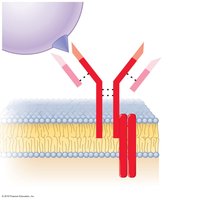
BCR structure: Composed of two heavy and two light chains forming a Y-shaped molecule. The variable regions at the tips form the antigen-binding sites.
Activation: When a BCR binds its specific epitope, the B cell proliferates and differentiates into plasma cells (which secrete antibodies) and memory B cells.
Antibody Structure and Function
Antibodies are Y-shaped proteins secreted by plasma cells. They bind specifically to antigens and mediate several immune functions:
Activation of complement and inflammation
Neutralization: Block pathogen activity
Opsonization: Enhance phagocytosis
Killing by oxidation
Agglutination: Clump pathogens for easier removal
Antibody-dependent cellular cytotoxicity (ADCC): Target cells for destruction by natural killer (NK) cells
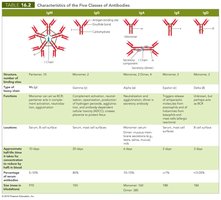
Classes of Antibodies (MADGE)
There are five main classes of antibodies, each with distinct roles:
Class | Structure | Function | Location |
|---|---|---|---|
IgM | Pentamer (5 Y-shaped units) | First antibody produced; efficient at agglutination and complement activation | Serum, B cell surface |
IgA | Dimer (2 Y-shaped units) | Secreted in mucosal areas; agglutination and neutralization | Secretions (saliva, tears, breast milk), serum |
IgD | Monomer | Membrane-bound antigen receptor on B cells; function not fully understood | B cell surface |
IgG | Monomer | Most abundant; crosses placenta; complement activation, opsonization, neutralization, ADCC | Serum, placenta |
IgE | Monomer | Triggers allergic responses and defense against parasites | Serum, bound to mast cells and basophils |
Clonal Deletion of B Cells
Self-reactive B cells are eliminated or inactivated in the bone marrow to prevent autoimmunity. Surviving B cells circulate and scan for antigens, communicating with other immune cells via cytokines.
Elements of Adaptive Immunity: Immune Response Cytokines
Cytokines and Their Roles
Cytokines are soluble regulatory proteins that act as intercellular signals in the immune system. They are secreted by various leukocytes and coordinate the immune response through a complex network of interactions.
Interleukins (ILs): Signal among leukocytes.
Interferons (IFNs): Antiviral proteins; IFN-γ activates phagocytes.
Growth factors: Stimulate leukocyte production.
Tumor necrosis factor (TNF): Kills tumor cells, regulates inflammation.
Chemokines: Attract leukocytes to infection sites.
Cell-Mediated Immune Responses
Mechanisms and Targets
Cell-mediated immunity targets intracellular pathogens (e.g., viruses, some bacteria and protozoa) and abnormal cells (e.g., cancer cells). Key mechanisms include:
Activation of cytotoxic T cells
Formation of memory T cells
Regulation to distinguish self from non-self
Antibody Immune Responses
T-Dependent and T-Independent Responses
T-dependent antibody immunity: Requires helper T cell activation; leads to strong, long-lasting antibody production and memory cell formation.
T-independent antibody immunity: Some antigens can activate B cells without T cell help; response is rapid but weak and short-lived (more common in children).
Types of Acquired Immunity
Active vs. Passive Immunity
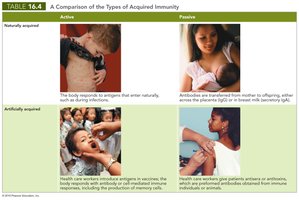
Acquired immunity can be classified based on how it is obtained:
Active | Passive | |
|---|---|---|
Naturally acquired | The body responds to antigens encountered naturally (e.g., infection) | Antibodies are transferred from mother to offspring (placenta or breast milk) |
Artificially acquired | Antigens are introduced via vaccines to stimulate immune response | Antibodies from immune individuals are administered (e.g., antiserum) |
Why is passive immunity effective more quickly than active immunity? Passive immunity provides immediate protection because pre-formed antibodies are transferred, whereas active immunity requires time for the body to generate its own immune response.
