Ch. 11 - Characterizing and Classifying Prokaryotes
Bauman - Microbiology with Diseases by Taxonomy 6th Edition
Bauman6th EditionMicrobiology with Diseases by TaxonomyISBN: 9780134832302Non è quello che usi tu?Cambia libro di testo
Capitolo 11, Problema 5

How is Halobacterium salinarum distinctive?


a. It is absolutely dependent on high salt concentrations to maintain its cell wall.
b. It is found in terrestrial volcanic habitats.
c. It photosynthesizes without chlorophyll.
d. It can survive 5 million rad of radiation.

Guida verificata passo dopo passo
1
Step 1: Understand the organism Halobacterium salinarum. It is an extremophile archaeon known for thriving in environments with very high salt concentrations.
Step 2: Analyze option (a): Halobacterium salinarum requires high salt concentrations to maintain the integrity of its cell wall and overall cellular structure, which is a key characteristic of halophilic archaea.
Step 3: Consider option (b): Terrestrial volcanic habitats are typically associated with thermophilic or acidophilic organisms, not halophiles like Halobacterium salinarum.
Step 4: Evaluate option (c): While Halobacterium salinarum can perform a type of photosynthesis using bacteriorhodopsin (a pigment different from chlorophyll), this is a distinctive feature but not the primary defining trait related to its salt dependence.
Step 5: Review option (d): Resistance to extremely high radiation doses is characteristic of organisms like Deinococcus radiodurans, not Halobacterium salinarum.

Risposta video verificata per un problema simile:

Questa soluzione video è stata consigliata dai nostri tutor come utile per risolvere questo problema.
Durata del video:
1m

Concetti chiave

Ecco i concetti essenziali che devi comprendere per rispondere correttamente alla domanda.

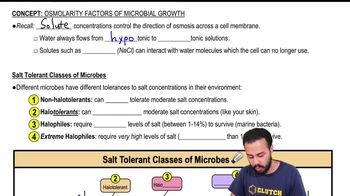
Halobacterium salinarum and Halophilicity

Halobacterium salinarum is an extremophilic archaeon that thrives in environments with very high salt concentrations, often above 20%. Its cellular structures, including the cell wall and membrane, require these conditions to maintain stability and function, making it obligately halophilic.
Video consigliato:
06:30
Osmolarity Factors for Microbial Growth

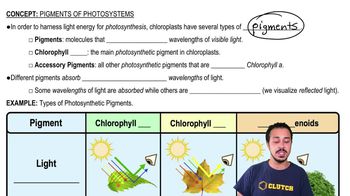
Phototrophy without Chlorophyll

Unlike plants and many bacteria that use chlorophyll for photosynthesis, Halobacterium salinarum uses a pigment called bacteriorhodopsin to capture light energy. This pigment enables it to perform a form of phototrophy by pumping protons to generate ATP without traditional chlorophyll-based photosynthesis.
Video consigliato:
05:58
Pigments of Photosynthesis

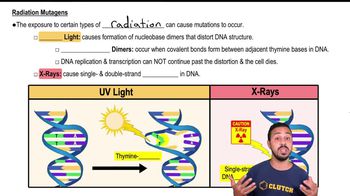
Radiation Resistance and Habitat

While some microorganisms can survive extreme radiation, Halobacterium salinarum is not known for extraordinary radiation resistance. It is primarily found in hypersaline environments like salt lakes, not volcanic habitats, distinguishing its ecological niche and stress adaptations.
Video consigliato:
02:55
Radiation Mutagens