Ch. 12 - Characterizing and Classifying Eukaryotes
Bauman - Microbiology with Diseases by Taxonomy 6th Edition
Bauman6th EditionMicrobiology with Diseases by TaxonomyISBN: 9780134832302Non è quello che usi tu?Cambia libro di testo
Capitolo 12, Problema 8

What is the role of rRNA sequencing in the classification of eukaryotic microbes?

Guida verificata passo dopo passo
1
Understand that rRNA (ribosomal RNA) sequencing involves determining the nucleotide sequence of ribosomal RNA genes, which are highly conserved across different organisms but contain variable regions useful for distinguishing species.
Recognize that in eukaryotic microbes, rRNA genes, such as the 18S rRNA gene, serve as molecular markers because they evolve slowly and provide reliable phylogenetic information.
Learn that by comparing the rRNA sequences of different eukaryotic microbes, scientists can infer evolutionary relationships and classify organisms based on genetic similarity rather than solely on morphological traits.
Note that rRNA sequencing helps identify and classify microbes that are difficult to culture or observe under a microscope, thus expanding our understanding of microbial diversity.
Conclude that the role of rRNA sequencing in classification is to provide a molecular tool that enables accurate, objective, and reproducible taxonomy and phylogeny of eukaryotic microbes.

Risposta video verificata per un problema simile:

Questa soluzione video è stata consigliata dai nostri tutor come utile per risolvere questo problema.
Durata del video:
2m

Concetti chiave

Ecco i concetti essenziali che devi comprendere per rispondere correttamente alla domanda.

rRNA Structure and Function

Ribosomal RNA (rRNA) is a fundamental component of the ribosome, essential for protein synthesis in all living cells. Its sequences are highly conserved across species, making rRNA an ideal molecular marker for studying evolutionary relationships among organisms, including eukaryotic microbes.
Video consigliato:
06:04
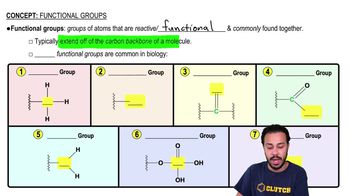
Functional Groups

Molecular Phylogenetics

Molecular phylogenetics uses genetic information, such as rRNA sequences, to infer evolutionary relationships. By comparing rRNA sequences from different eukaryotic microbes, scientists can construct phylogenetic trees that reveal how these organisms are related and classify them based on genetic similarity.
Video consigliato:
03:20
The 3 Molecular Koch's Postulates

Classification of Eukaryotic Microbes

Eukaryotic microbes include diverse groups like protists and fungi, which can be difficult to classify morphologically. rRNA sequencing provides a genetic approach to classification, enabling more accurate identification and grouping based on evolutionary lineage rather than solely on physical traits.
Video consigliato:
04:56
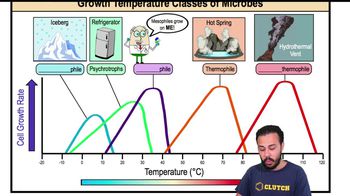
Classification of Microbes by Growth Temperature