
Ch. 13 - Characterizing and Classifying Viruses, Viroids, and Prions
Bauman - Microbiology with Diseases by Taxonomy 6th Edition
Bauman6th EditionMicrobiology with Diseases by TaxonomyISBN: 9780134832302Non è quello che usi tu?Cambia libro di testo
Capitolo 13, Problema 4

Describe four different ways that viral nucleic acid can enter a host cell.

Guida verificata passo dopo passo
1
Step 1: Understand that viral nucleic acid must enter the host cell to initiate infection, and different viruses have evolved distinct mechanisms to achieve this entry.
Step 2: Describe the first method: Direct penetration, where the viral capsid attaches to the host cell membrane and injects its nucleic acid directly into the cytoplasm without the entire virus entering the cell.
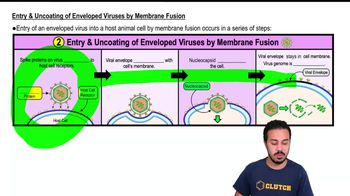
Step 3: Describe the second method: Membrane fusion, which occurs mainly in enveloped viruses. The viral envelope fuses with the host cell membrane, allowing the nucleocapsid to enter the cytoplasm.
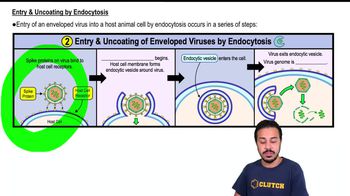
Step 4: Describe the third method: Endocytosis, where the virus binds to receptors on the host cell surface and is engulfed into an endocytic vesicle. The viral nucleic acid is then released into the cytoplasm after the vesicle is processed.
Step 5: Describe the fourth method: Uncoating within the host cell, where after endocytosis or penetration, the viral capsid is removed inside the cell, releasing the nucleic acid to begin replication.

Risposta video verificata per un problema simile:

Questa soluzione video è stata consigliata dai nostri tutor come utile per risolvere questo problema.
Durata del video:
4m

Concetti chiave

Ecco i concetti essenziali che devi comprendere per rispondere correttamente alla domanda.

Viral Entry Mechanisms

Viruses use specific strategies to deliver their nucleic acid into host cells, including direct penetration, membrane fusion, endocytosis, and injection. Understanding these mechanisms is essential to grasp how viruses initiate infection.
Video consigliato:
05:12
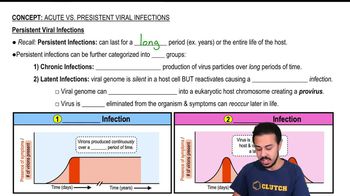
Persistent Viral Infections

Membrane Fusion

Enveloped viruses can fuse their lipid envelope with the host cell membrane, allowing the viral nucleic acid to enter the cytoplasm directly. This process often involves viral fusion proteins triggered by receptor binding or pH changes.
Video consigliato:
02:59
Entry & Uncoating of Enveloped Viruses by Membrane Fusion

Endocytosis and Uncoating

Some viruses enter cells via endocytosis, where the host cell engulfs the virus in a vesicle. The virus then escapes the vesicle by uncoating, releasing its nucleic acid into the cytoplasm to begin replication.
Video consigliato:
02:29
Entry & Uncoating by Endocytosis