Ch. 14 - Infection, Infectious Diseases, and Epidemiology
Bauman - Microbiology with Diseases by Taxonomy 6th Edition
Bauman6th EditionMicrobiology with Diseases by TaxonomyISBN: 9780134832302Non è quello che usi tu?Cambia libro di testo
Capitolo 14, Problema 7

Which of the following are most likely to cause disease?
a. Opportunistic pathogens in a weakened host
b. Pathogens lacking the enzyme kinase
c. Pathogens lacking the enzyme collagenase
d. Highly virulent organisms

Guida verificata passo dopo passo
1
Step 1: Understand the definition of each term in the options. Opportunistic pathogens are microbes that normally do not cause disease in a healthy host but can cause infections when the host's immune system is weakened.
Step 2: Recognize that enzymes like kinase and collagenase are virulence factors that help pathogens invade tissues, but lacking these enzymes may reduce a pathogen's ability to cause disease.
Step 3: Consider that highly virulent organisms have strong mechanisms to infect and cause disease even in healthy hosts, making them more likely to cause disease.
Step 4: Compare the options by evaluating which conditions or characteristics increase the likelihood of causing disease: weakened host defenses (opportunistic pathogens) versus inherent pathogen virulence (highly virulent organisms).
Step 5: Conclude that both opportunistic pathogens in weakened hosts and highly virulent organisms are most likely to cause disease, while pathogens lacking key enzymes are less likely to be effective pathogens.

Risposta video verificata per un problema simile:

Questa soluzione video è stata consigliata dai nostri tutor come utile per risolvere questo problema.
Durata del video:
2m

Concetti chiave

Ecco i concetti essenziali che devi comprendere per rispondere correttamente alla domanda.

Opportunistic Pathogens

Opportunistic pathogens are microbes that normally do not cause disease in healthy individuals but can cause infections when the host's immune system is weakened or compromised. They exploit reduced host defenses to establish infection, making them significant in immunocompromised patients.
Video consigliato:
03:40
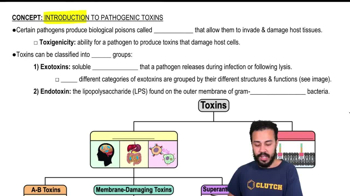
Introduction to Pathogenic Toxins

Virulence Factors and Enzymes

Virulence factors are molecules produced by pathogens that enhance their ability to cause disease. Enzymes like kinase and collagenase help pathogens invade tissues and evade immune responses. The absence of such enzymes can reduce a pathogen's ability to spread and cause damage.
Video consigliato:
03:48
Environmental Factors Affecting Enzyme Activity

Virulence and Disease Severity

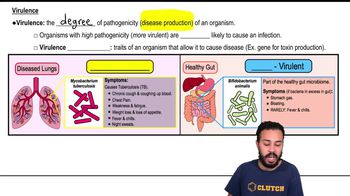
Virulence refers to the degree of pathogenicity or the severity of disease a microorganism can cause. Highly virulent organisms possess multiple factors that enable rapid infection and damage, making them more likely to cause serious disease compared to less virulent strains.
Video consigliato:
03:05
Virulence