Why did epidemiologists immediately suspect terrorism in the cases of anthrax in the fall of 2001?
Ch. 19 - Pathogenic Gram-Positive Bacteria
Bauman6th EditionMicrobiology with Diseases by TaxonomyISBN: 9780134832302Non è quello che usi tu?Cambia libro di testo
Capitolo 19, Problema 8
The bacterium causing pseudomembranous colitis is
a. Clostridium difficile
b. Streptococcus pyogenes
c. Mycobacterium avium-intracellulare
d. Corynebacterium diphtheriae
Guida verificata passo dopo passo1
Step 1: Understand the disease pseudomembranous colitis, which is an inflammation of the colon characterized by the formation of pseudomembranes on the colon lining, often associated with antibiotic use.
Step 2: Recall that pseudomembranous colitis is primarily caused by a bacterial infection that produces toxins leading to colonic inflammation.
Step 3: Review the options given: a) Clostridium difficile, b) Streptococcus pyogenes, c) Mycobacterium avium-intracellulare, d) Corynebacterium diphtheriae.
Step 4: Identify that Clostridium difficile is a spore-forming, anaerobic bacterium known to cause antibiotic-associated diarrhea and pseudomembranous colitis by producing enterotoxins.
Step 5: Conclude that among the options, Clostridium difficile is the bacterium responsible for pseudomembranous colitis.

Risposta video verificata per un problema simile:
Questa soluzione video è stata consigliata dai nostri tutor come utile per risolvere questo problema.
Durata del video:
2mConcetti chiave
Ecco i concetti essenziali che devi comprendere per rispondere correttamente alla domanda.
Pseudomembranous Colitis
Pseudomembranous colitis is an inflammation of the colon characterized by the formation of pseudomembranes on the intestinal lining. It typically occurs after antibiotic use disrupts normal gut flora, allowing pathogenic bacteria to overgrow and cause severe diarrhea and colonic damage.
Clostridium difficile
Clostridium difficile is a Gram-positive, spore-forming anaerobic bacterium known to cause antibiotic-associated diarrhea and pseudomembranous colitis. It produces toxins that damage the intestinal mucosa, leading to inflammation and the characteristic pseudomembranes.
Video consigliato:
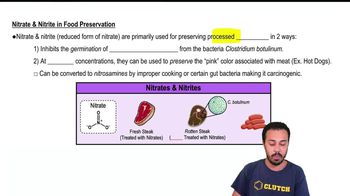
Nitrate & Nitrite in Food Preservation
Differentiation of Bacterial Pathogens
Understanding the specific diseases caused by different bacteria is essential in microbiology. For example, Streptococcus pyogenes causes strep throat, Mycobacterium avium-intracellulare is linked to opportunistic infections in immunocompromised patients, and Corynebacterium diphtheriae causes diphtheria, not colitis.
Video consigliato:
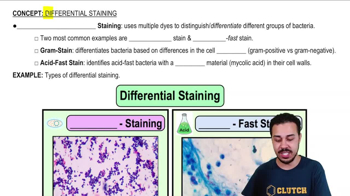
Differential Staining
Pratica correlata
Domanda del libro di testo
1161
views
Domanda del libro di testo
Explain why Staphylococcus epidermidis is rarely pathogenic while the similar S. aureus is more commonly virulent.
1123
views
Domanda del libro di testo
Pathogenic strains that have become resistant to antimicrobial drugs are found in which of the following genera?
a. Staphylococcus
b. Mycobacterium
c. Enterococcus
d. All of the above
978
views
Domanda del libro di testo
In which of the following diseases would a patient experience a pseudomembrane covering the tonsils, pharynx, and larynx?
a. Tuberculoid leprosy
b. Diphtheria
c. Arrhythmia
d. Tetanus
1143
views
Domanda del libro di testo
Of the following genera, which can survive the harshest conditions?
a. Staphylococcus
b. Clostridium
c. Mycobacterium
d. Actinomyces
1422
views
Domanda del libro di testo
Explain the different actions of pyogenic and pyrogenic toxins.
1640
views