Ch. 19 - Pathogenic Gram-Positive Bacteria
Bauman - Microbiology with Diseases by Taxonomy 6th Edition
Bauman6th EditionMicrobiology with Diseases by TaxonomyISBN: 9780134832302Non è quello che usi tu?Cambia libro di testo
Capitolo 19, Problema 7

Explain the different actions of pyogenic and pyrogenic toxins.

Guida verificata passo dopo passo
1
Step 1: Define pyogenic toxins by explaining that these toxins stimulate the production of pus by attracting and activating neutrophils, which are white blood cells involved in the inflammatory response.
Step 2: Describe how pyogenic toxins contribute to the formation of abscesses and localized infections by promoting the accumulation of neutrophils and dead cells at the infection site.
Step 3: Define pyrogenic toxins as toxins that induce fever by acting on the hypothalamus, the part of the brain that regulates body temperature.
Step 4: Explain that pyrogenic toxins trigger the release of endogenous pyrogens such as interleukin-1 (IL-1) and tumor necrosis factor (TNF), which then cause the hypothalamus to raise the body's temperature set point, resulting in fever.
Step 5: Summarize the key difference by stating that pyogenic toxins primarily cause pus formation and localized inflammation, while pyrogenic toxins primarily cause systemic effects like fever.

Risposta video verificata per un problema simile:

Questa soluzione video è stata consigliata dai nostri tutor come utile per risolvere questo problema.
Durata del video:
2m

Concetti chiave

Ecco i concetti essenziali che devi comprendere per rispondere correttamente alla domanda.

Pyogenic Toxins

Pyogenic toxins are bacterial toxins that stimulate the production of pus by attracting and activating neutrophils at the site of infection. These toxins often cause localized inflammation and tissue damage, leading to abscess formation. They are commonly produced by bacteria like Staphylococcus aureus.
Video consigliato:
03:40
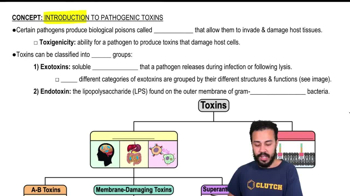
Introduction to Pathogenic Toxins

Pyrogenic Toxins

Pyrogenic toxins are bacterial exotoxins that induce fever by triggering the release of endogenous pyrogens such as interleukin-1 and tumor necrosis factor from immune cells. These toxins can cause systemic effects like fever and rash, as seen in diseases like scarlet fever caused by Streptococcus pyogenes.
Video consigliato:
03:40
Introduction to Pathogenic Toxins

Mechanisms of Immune Activation by Toxins

Both pyogenic and pyrogenic toxins activate the immune system but through different pathways: pyogenic toxins recruit neutrophils causing pus formation, while pyrogenic toxins act as superantigens or stimulate cytokine release leading to fever. Understanding these mechanisms explains their distinct clinical manifestations.
Video consigliato:
03:40
Introduction to Pathogenic Toxins