
Ch. 2 - The Chemistry of Microbiology
Bauman - Microbiology with Diseases by Taxonomy 6th Edition
Bauman6th EditionMicrobiology with Diseases by TaxonomyISBN: 9780134832302Non è quello che usi tu?Cambia libro di testo
Capitolo 2, Problema 7

Reactions that release energy are called __________ reactions.

Guida verificata passo dopo passo
1
Identify the type of reaction that releases energy in biological systems.
Recall that reactions releasing energy often involve breaking down complex molecules into simpler ones.
Understand that these reactions are known as catabolic reactions because they break down molecules and release energy.
Recognize that the specific term for reactions that release energy is 'exergonic' reactions, which means they release free energy.
Conclude that the blank should be filled with 'exergonic' or 'catabolic' reactions, depending on the context.

Risposta video verificata per un problema simile:

Questa soluzione video è stata consigliata dai nostri tutor come utile per risolvere questo problema.
Durata del video:
2m

Concetti chiave

Ecco i concetti essenziali che devi comprendere per rispondere correttamente alla domanda.

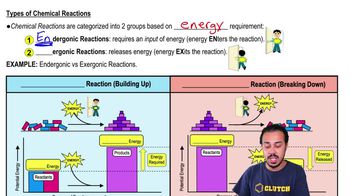
Exergonic Reactions

Exergonic reactions are chemical processes that release energy, usually in the form of heat or light. These reactions occur spontaneously because the products have lower free energy than the reactants, making energy available for cellular activities.
Video consigliato:
05:48
Types of Chemical Reactions

Energy in Chemical Reactions

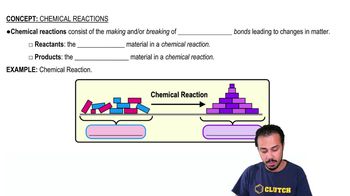
Chemical reactions involve breaking and forming bonds, which requires or releases energy. Understanding how energy changes during reactions helps explain why some reactions release energy (exergonic) while others require energy input (endergonic).
Video consigliato:
01:56
Chemical Reactions

Role of ATP in Energy Transfer

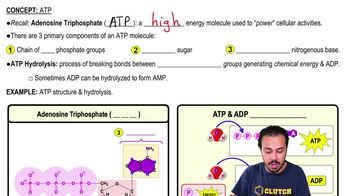
ATP (adenosine triphosphate) acts as the main energy currency in cells, storing and transferring energy released from exergonic reactions to power various biological processes, such as metabolism and active transport.
Video consigliato: